A story about moving to a new house is a short, calm, first-person story that tells a child what will change and what will stay the same: the house is new, and their family, their bed and their toys come too. It is read in the days before the move, so moving day is something they have already heard about.
If your child keeps asking where their toys are going, has unpacked a box you just taped shut, or has gone quiet about the whole thing, you are in very ordinary company. A move is a big change for a small person, and you are carrying a lot of it yourself. Feeling sad, cross or clingy about leaving a home is a normal feeling, and it does not mean something is wrong with your child.
What this story is for
A moving story turns "we're moving" into things a child can picture: what goes in the boxes, what the truck does, where they will sleep, and who will be there.
"Moving" is a big word for a small child. They watch their things disappear into boxes, and they may not know that the boxes get opened again. A child may quietly wonder whether the toys, the pet or even the people are coming. The story below says that they are.
A moving story describes the days in order: packing, the truck, the trip, the new room. It names the feeling of missing the old place, and it gives your child a small job and a few things to say. It does not tell your child they will love the new house. They might, and they might miss the old one for a while too.
The story leaves out the reasons for the move. If your child asks why, answer in a sentence or two of your own.
A move is a change for the whole family, a little like a new baby. If you have that change coming too, a story about a new sibling for toddlers uses the same calm shape.
What to include
Say what is changing, say what stays the same, show the steps of moving day, and give your child one small job.
- Your child's name and both homes. "Our apartment by the park" and "our new house with the green door" are easier to picture than "the old place" and "the new place."
- The boxes. Things go into boxes so they can ride to the new home. The boxes get opened again.
- What comes too. My family, my bed, my toys, my blanket, our pet. Name the things your child cares about most.
- What stays behind. The old bedroom, the yard, the tree outside the window. Say it kindly and plainly.
- The feeling, without blame. "I might miss my old room. That is okay."
- Moving day itself. A truck or a car, people carrying heavy things, a busy and noisy day.
- A small job. Carrying a backpack, keeping a special toy safe, choosing where the bed goes.
- The new bedroom. Where your child will sleep, and which familiar things will be there.
- What stays the same. The same bedtime story, the same breakfast, the same hugs.
- A warm ending. The first night in the new room, with the family close by.
A ready-to-read story about moving to a new house
Swap in your child's name, the people in your family, your pets and the things your child loves most. If you are moving to an apartment or to a relative's home, use those words in place of "house."
Mateo and the New House
My name is Mateo. Soon my family is moving to a new house.
Moving means we take our things to a new place, and then we live there.
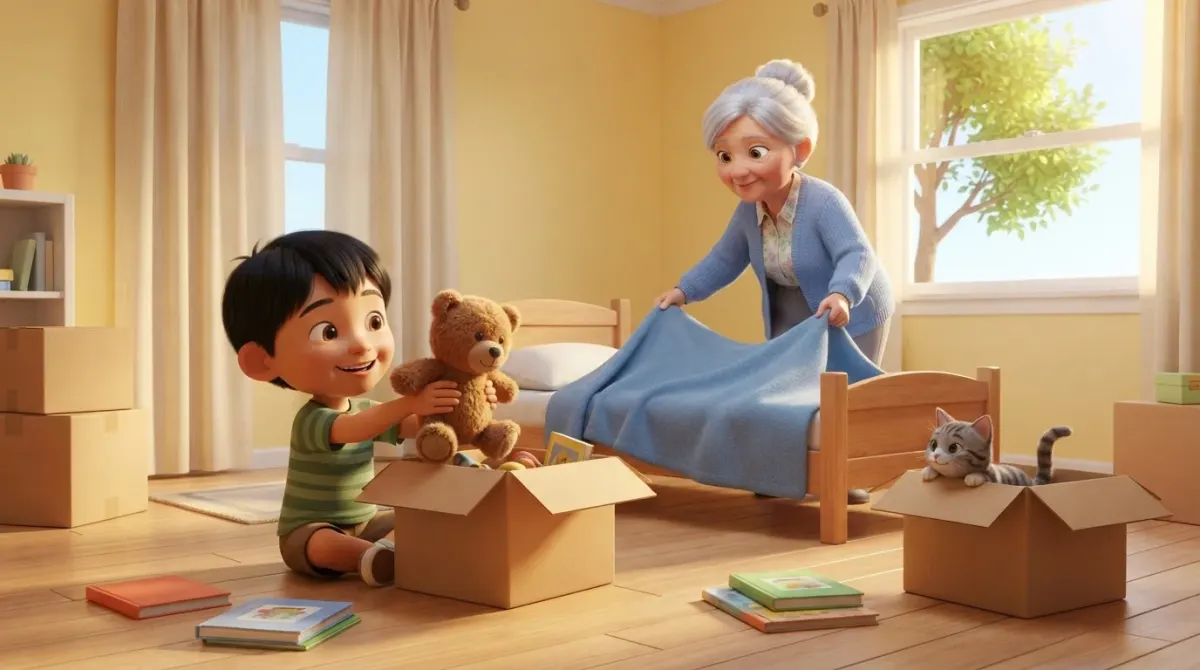
My family is coming. Mama, Abuela, my sister Lucia and our cat Pepper all come too.
We put our things in boxes. My toys go in a box. My books go in a box.
The boxes ride to the new house. Then we open them, and my things come out again.
My bed comes too. My blue blanket and my bear come too.
Some things stay. My old room stays, and the tree outside my window stays.
I might miss my old room. I might feel sad or mad. That is okay.
On moving day, a big truck comes. People carry heavy things. It is busy and loud.
My job is to carry my backpack and keep Bear safe.
The new house has a room for me. My bed is there. My blue blanket is there.
Some things are the same. We still have pancakes on Saturday, and I still get a story at bedtime.
Sometimes I forget where things are in the new house. That is okay. I can ask, and I can try again.
On the first night, I sleep in my bed in my new room. My family is right here.
Notice the story never tells Mateo he will love the new house. It tells him what comes along, what stays behind and what stays the same, and it lets him miss his old room.
Tips for reading it
Start before the boxes pile up, keep the story honest, and let your child see their own things packed and unpacked.
- Start when the first boxes come out. Read it at a calm time, such as bedtime or a quiet afternoon, and keep reading it through the first weeks in the new home.
- Pack your child's things with them. Let them put a few toys in a box, tape it and draw on the outside.
- Keep the comfort items out. The blanket, the bear and a few favorite books travel with your child, not in the truck. Put that in the story.
- Show the new place if you can. A visit, a photo or a walk past the building gives your child something to picture. If you cannot visit, describe one or two true things, like the color of the door.
- Set up their bed first. If you can, make your child's bed with the same bedding on the first night, so the room matches the story.
- Say goodbye to the old home. Walk through the empty rooms, wave to the tree, take a photo of the old bedroom. A goodbye gives the missing feeling somewhere to go.
- Only promise what is true. If your child will share a room, or the swing set is staying behind, the story should say so, kindly.
Making one starring your child with WonderCast
You type one sentence about the situation, and WonderCast writes and illustrates a short, calm story starring your child, by name and by look.
A prompt like "Mateo packs his toys in a box, rides to the new house with his cat Pepper, and sleeps in his own bed in his new room" is enough. Add your own details: the color of the new front door, the pet who comes along, the blanket that rides in the car.
- Read together or listen. Read it as a storybook, or play it as an audiobook.
- No photo needed. A written description of your child is enough to make their character.
- A calm setting. Every story request goes through a safety check, and WonderCast is 100% ad-free.
WonderCast comes with 10 free books, so you can try a moving story and a few others. A move can stir up worries that come out at bedtime, and a story about worries gives those a calm place of their own.
If you are weighing personalized books, we compared Wonderbly and its alternatives and the best bedtime story apps for kids.
Frequently asked questions
What is a story about moving to a new house? It is a short, first-person story that describes a family move in order: packing, moving day, the trip and the new bedroom. It says what changes, what stays the same, and that the child's family and favorite things come too.
What if my child says they do not want to move? That is a fair thing to feel, and the story has room for it. You can agree that leaving is sad and still be clear that the family is going together. Use the story's own words: "You might miss your old room. That is okay. Your bed and your bear are coming too."
My child's sleep or mood has changed since the move. What should I do? Changes in sleep, eating or mood are questions for your pediatrician, who knows your child. A story can describe the move and give your child words for it. It does not replace that advice.
Can I use this story for an apartment, or for a move far away? Yes. Change "house" to the word your family uses, and change the truck to a car, a train or whatever is true for you. If the trip includes a flight, a social story for flying on an airplane walks through the airport and the plane.
Start before the first box is taped
Read the story tonight, pack one box together tomorrow, and read it again on the first night in the new room. When you want a version with your own child, their own bed and their own bear, start on the social stories page.