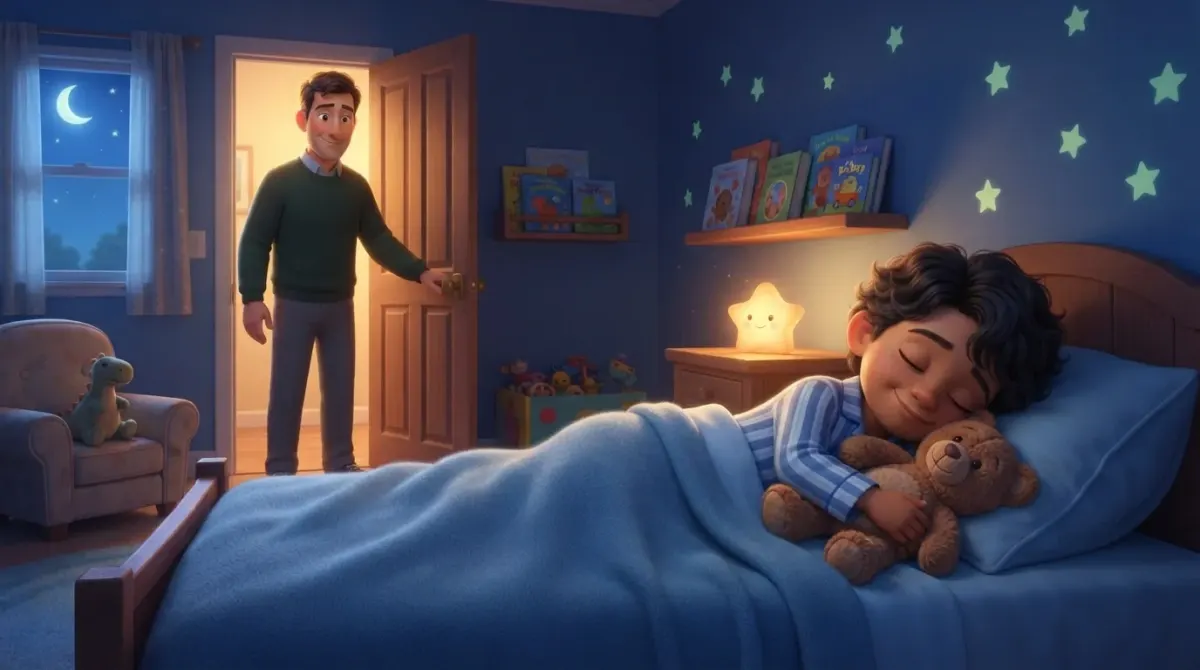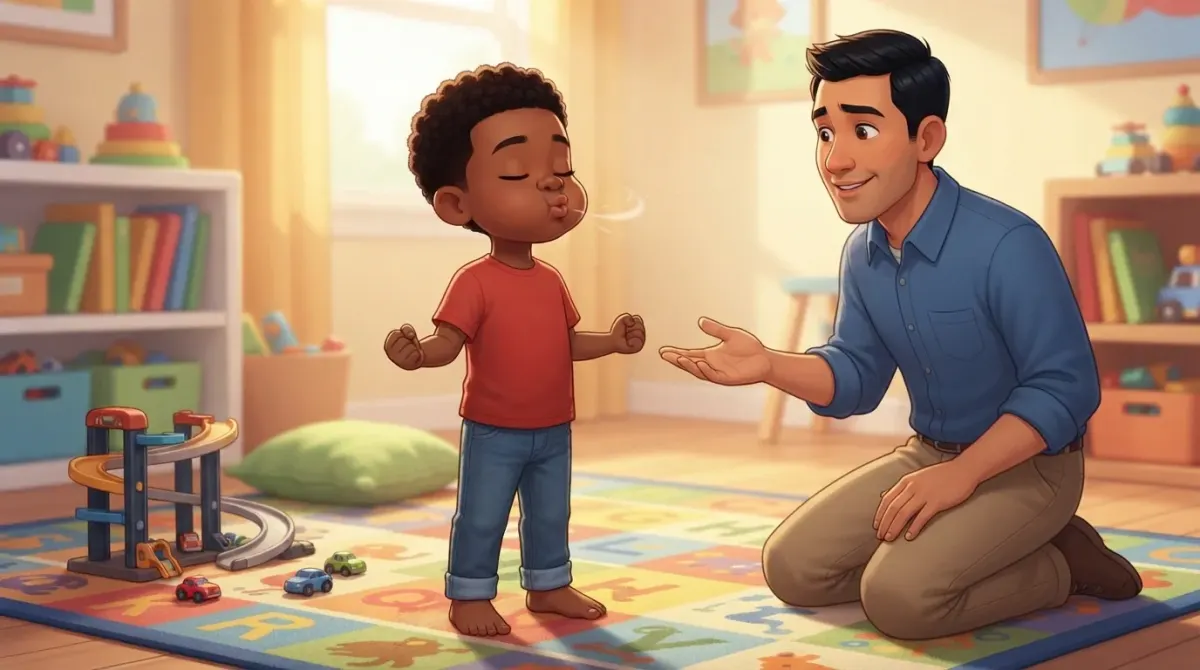
A story about worries is a short, calm, first-person story that describes what a worry feels like, says that everybody has worries sometimes, and gives a child a few things to do with one: say it out loud, tell a grown-up, take slow breaths, and think about what they already know. It is read at a calm time, so the words are familiar the next time a "what if" shows up before school or bed.
If your child has a tummy full of "what ifs" on school mornings or at lights-out, you are in very ordinary company. Worries are a common part of childhood, and a child who worries is not being dramatic or difficult.
This post is about everyday worries. It is not medical advice, and it is not about anxiety disorders. If your child's worries are frequent, intense or get in the way of daily life, talk to your pediatrician.
What this story is for
A worry story gives the feeling a name, and gives a child something to do with a worry besides carry it alone.
Small children often feel a worry in the body first: a tummy ache before school, a tight chest at bedtime, a sudden "I don't want to go." They may not have a word for it yet. A story supplies the word and describes the feeling in plain terms, so a child has a way to say "I have a worry."
"Don't worry" is kind, and hard to follow. It asks a child to stop a thought without offering a next step. The story below does not tell the child to stop worrying, and it does not promise that the thing they are worried about will never happen. It describes the moment, names the feeling, and offers a few steps: say the worry out loud, tell a grown-up, breathe slowly, and remember what is known.
A story like this is a way to talk together. It is not a treatment, and it makes no promise about how your child will feel afterward.
Worries often gather around two moments. For lights-out, a story about being afraid of the dark offers bedtime comforts. For a new classroom, a social story for the first day of school walks through the day step by step.
What to include
Describe the feeling in the body, name it as a worry, say that everybody has them, and give three or four things to do.
- Your child's name and when worries tend to come. Before school, at bedtime, before a new place.
- What a worry feels like. A fluttery tummy, a fast heart, a busy head. Use your child's own words.
- The "what if" itself. One or two real examples in your child's words, kept mild.
- A plain line that worries are common. "Everybody has worries sometimes. Kids have them, and grown-ups have them too."
- Saying it out loud. "I can say, 'I have a worry.'"
- A grown-up who listens. Name the real people: a parent, a grandparent, a teacher.
- Something for the body. Slow breaths, a hug, holding a hand.
- What your child does know. Who will be there, what happens first, who picks them up.
- A line for hard days. "Sometimes I forget. That is okay. I can try again."
- A calm ending. The worry may be smaller or it may still be there. Either way, your child is not alone with it.
A ready-to-read story about worries
Swap in your child's name, their own what-ifs and the grown-ups they can tell. One line per page works well if you are making a booklet.
Leila and the What-Ifs
My name is Leila. I like drawing, my scooter and pancakes on Saturday.
Sometimes my tummy feels fluttery, and my head feels busy.
That feeling is called a worry.
A worry is a "what if" thought. What if I miss my mom at school? What if I can't fall asleep?
Everybody has worries sometimes. Kids have them, and grown-ups have them too.
When I have a worry, I do not have to keep it inside.
I can say, "I have a worry."
I can tell my mom, my dad or my teacher. They will listen.
I can take three slow breaths and feel my feet on the floor.
I can ask for a hug or hold someone's hand.
Then I can think about what I know. My teacher will be there. My mom comes back after school.
Sometimes my worry feels smaller after I share it. Sometimes it stays for a while. Both are okay.
Sometimes I forget, and I keep my worry inside. That is okay. I can try again.
I am not alone with my worries. My grown-ups are here with me.
Notice the story never says "don't worry," and it never promises the worry will go away. It says worries are common, that Leila can say hers out loud, and that her grown-ups will listen.
Tips for reading it
Read it at a calm time, listen before you reassure, and keep your answers short and true.
- Choose a calm moment. A quiet afternoon or the early part of the bedtime routine. The rushed minutes before school are not the time.
- Listen first. When your child shares a worry, say it back: "You are worried about lunch time." Being heard comes before any answer.
- Keep answers short and true. "I will pick you up after snack" is better than "nothing will go wrong." Only promise what you can deliver.
- Fill in what is known. Many what-ifs are about not knowing. Walk through the plan: who will be there, what happens first, who comes back.
- Give worries a regular spot in the day. Some families make time for worries at dinner or in the bath, so that lights-out is not the only chance to share one.
- Bring in your child's team. Tell the teacher what your child is worried about, so the same words can be used at school.
- Know when to ask for more help. If worries are frequent, intense, or get in the way of daily life, such as sleeping, eating, going to school or playing, talk to your pediatrician. They can tell you what is typical and what the next step is.
Making one starring your child with WonderCast
You type one sentence about the situation, and WonderCast writes and illustrates a short, calm story starring your child, by name and by look.
A prompt like "Leila has a fluttery tummy before school, so she tells her mom about her worry and takes three slow breaths" is enough. Add your own details: the time of day worries come, the grown-up your child likes to tell, the teacher's name.
- Read together or listen. Read it as a storybook, or play it as an audiobook.
- No photo needed. A written description of your child is enough to make their character.
- A calm setting. Every story request goes through a safety check, and WonderCast is 100% ad-free.
WonderCast comes with 10 free books, so you can try a worry story and a few others before choosing a plan; see pricing. A story is something to read together. It does not replace advice from your pediatrician.
If you are weighing personalized books, we compared Wonderbly and its alternatives and the best bedtime story apps for kids.
Frequently asked questions
What is a story about worries? It is a short, first-person story that describes what a worry feels like in the body and gives it a name. It says that everybody has worries sometimes, and it lists a few things a child can do: say the worry out loud, tell a grown-up, take slow breaths, and think about what they know.
Is it normal for a child to worry? Worries are a common part of growing up, and they often show up around new things, such as a new school, a new sitter or a change at home. Every child is different. Your pediatrician can tell you more about what to expect for your own child.
What should I say when my child asks "what if"? Start by naming it: "That sounds like a worry." Then listen, and answer with something short and true, such as who will be there or what happens first. You do not need an answer for everything. "I don't know yet, and we can find out together" is an honest answer too.
When should I talk to the pediatrician about my child's worries? If worries are frequent, intense, or get in the way of daily life, such as sleeping, eating, going to school or playing with friends, talk to your pediatrician. You do not need to wait until you are sure something is wrong.
Does this story treat anxiety? No. It is a storybook-style script for everyday worries, and it makes no health claims. It is not about anxiety disorders, and it does not replace care from a doctor or therapist. If you have questions about anxiety, your pediatrician is the right person to ask.
Start with one worry
Read the story at a calm time this week, and ask your child what their own what-ifs sound like. When you want a version with your own child, their own worries and their own grown-ups, start on the social stories page.