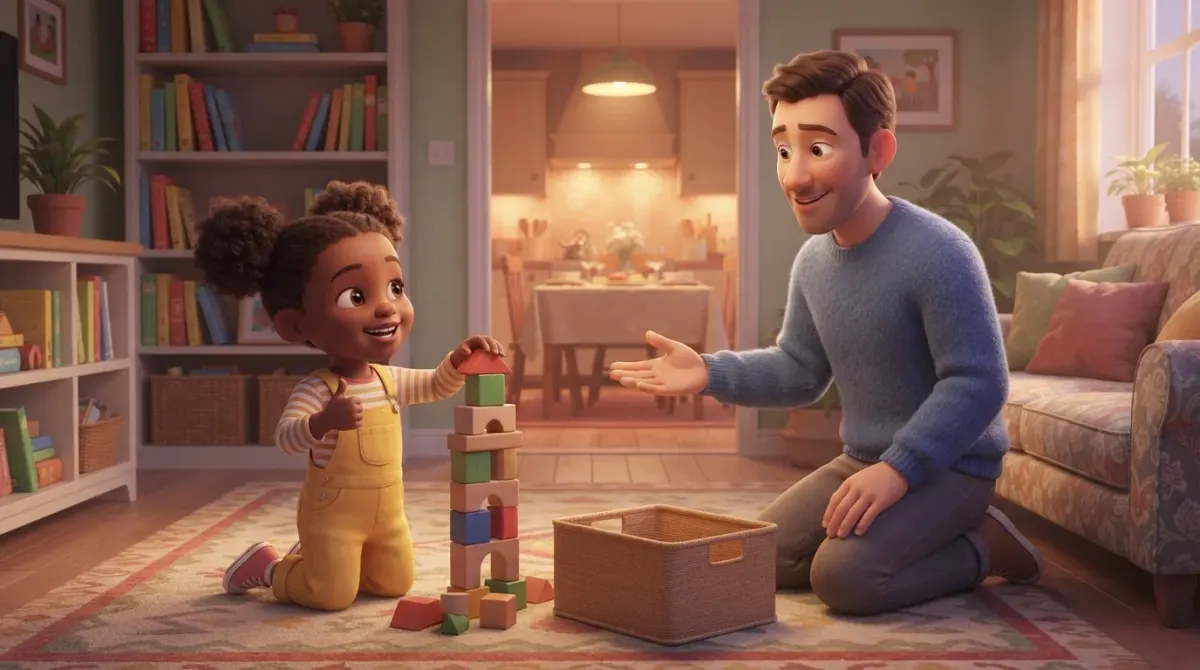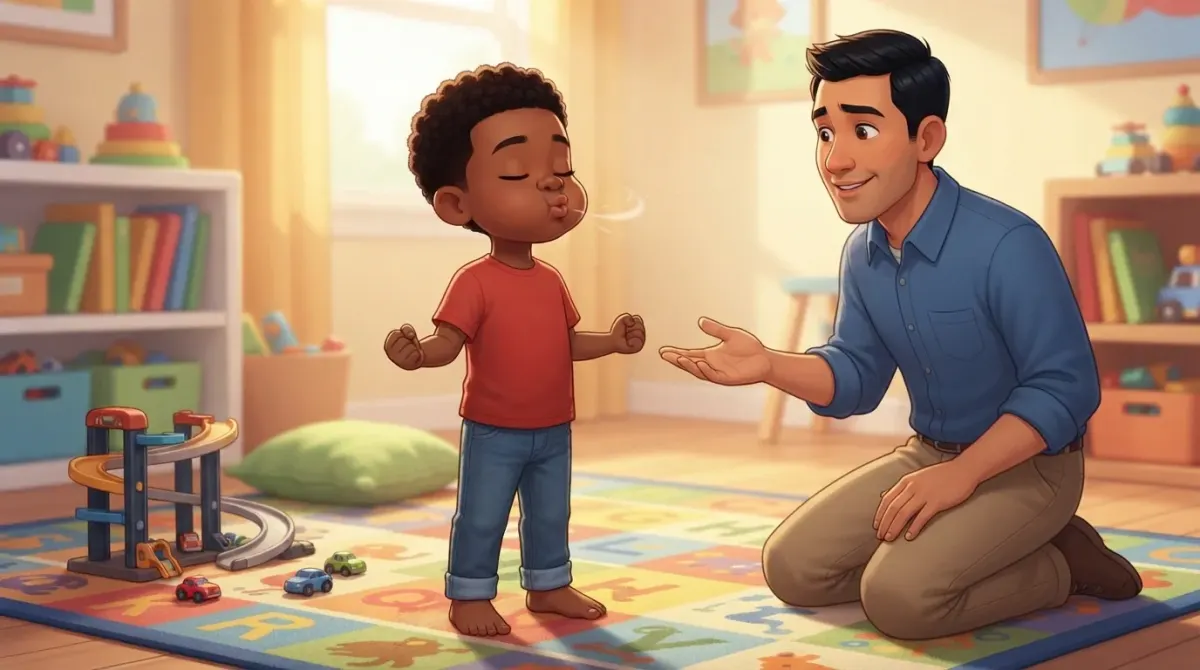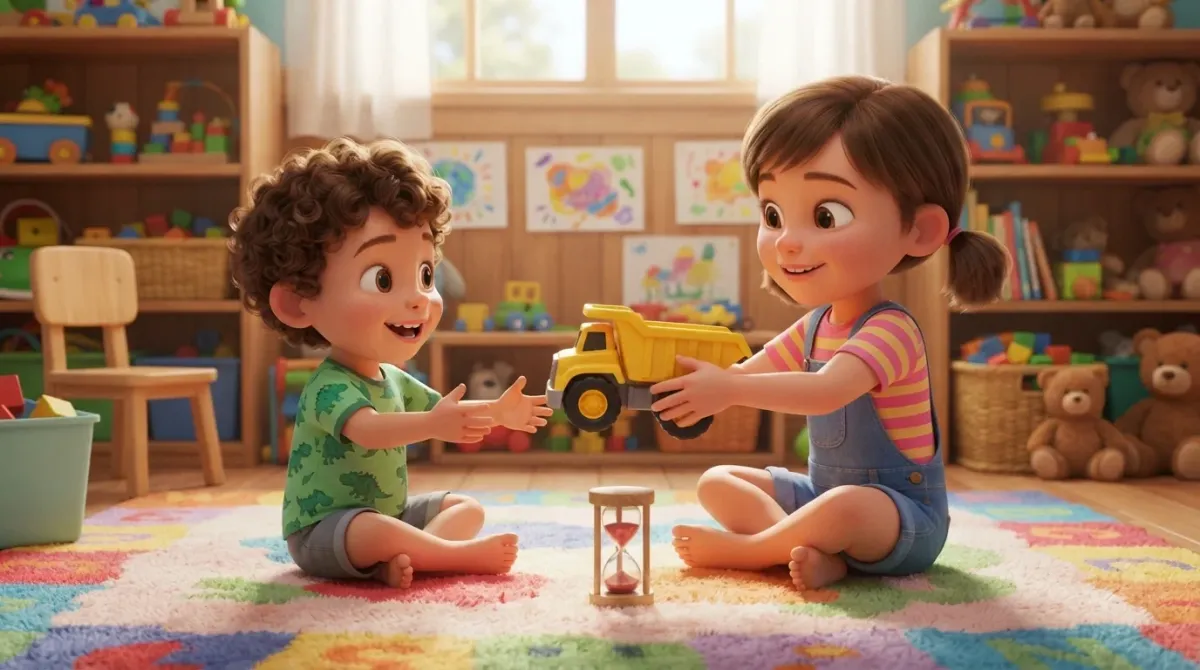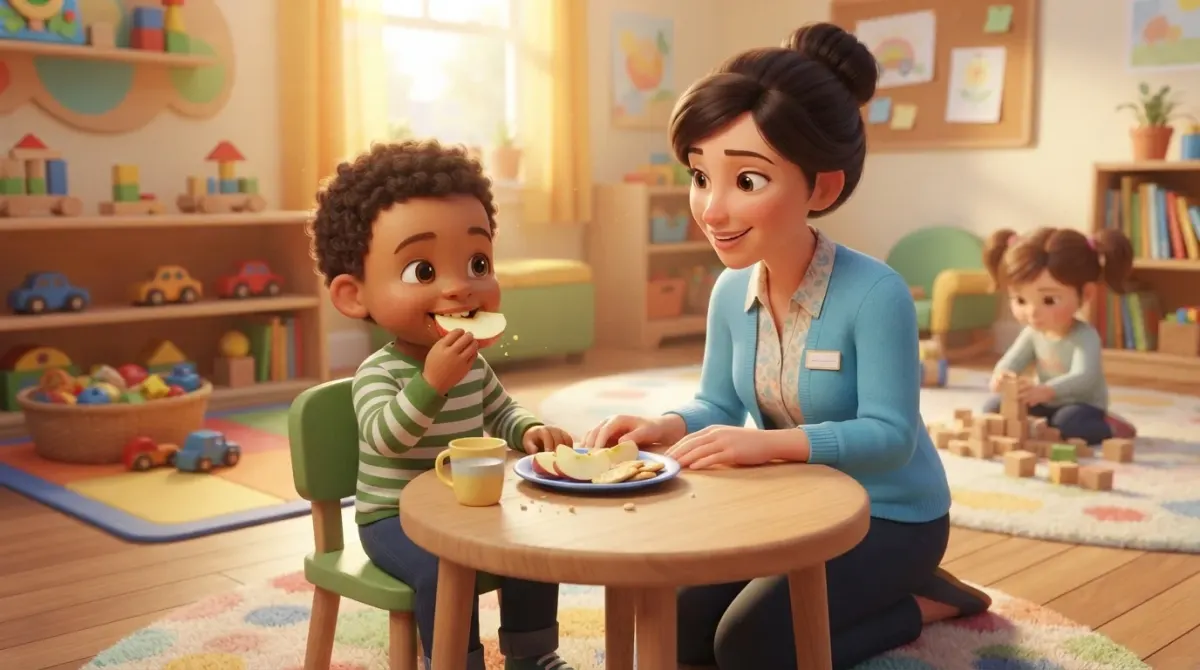
A social story about biting is a short, calm, first-person story that describes the moment a child feels like biting, says plainly that teeth are for food, and gives the child other things to do: use words, ask a grown-up for help, move away, or bite a chewy toy or snack that a grown-up offers. It is read on a calm day, so the words are familiar before the next crowded moment on the playroom rug.
If your child has bitten a sibling, a friend or you, or a note has just come home from daycare, you are in very ordinary company. Plenty of toddlers and preschoolers bite at some point. A bite does not mean your child is mean, and it does not mean you have done something wrong.
What this social story is for
A biting story turns "no biting" into something a child can picture: what teeth are for, what the big feeling is called, and what to do with it.
"No biting" tells a child what to stop. It does not tell them what to do with the feeling that came first. Bites often seem to arrive in a rush: a toy is taken, the room gets loud, a friend sits too close, or a game gets very exciting. A small child with a big feeling and only a few words may use their mouth before anyone sees it coming.
The story below keeps to what you can see: a feeling, a tight mouth, and a few other choices. It does not try to explain why your own child bites. For that, your pediatrician and your child's teacher are the right people to ask.
Social stories were developed by Carol Gray in 1991 as short, plain descriptions of a situation, shared ahead of time. WonderCast is not affiliated with Carol Gray or The Gray Center; we use "social story" in the everyday sense parents and teachers do. Our guide to social stories for autism covers the format in more depth.
A biting story describes the moment, names the feeling without blame, says one clear thing about teeth, and offers a few calm options. It never calls your child a biter. Your child is learning what to do with a hard feeling, and the story talks to them that way.
Biting and hitting are different moments, and they need different words. If hands are the fast part in your house, a social story for keeping hands to self is written for that moment. This one stays with mouths and teeth.
What to include
Describe the moment, name the feeling, say what teeth are for, give a few things to do instead, and end with everyone safe.
- Your child's name and real places. The block corner, the couch, the line for the slide.
- The moment it happens. Someone takes a toy, the room gets loud, a friend sits too close, or a game gets very exciting.
- The feeling, without blame. "Sometimes I feel mad or squeezed. All feelings are okay."
- What teeth are for. One short, plain line: "Teeth are for food."
- How a bite feels to someone else. One line, with no shame in it: "Biting hurts. People are not for biting."
- Words to say. "Stop," "Too close," "That's mine," and "Help, please."
- Other things to do. Find a grown-up, move to a spot with more room, or bite a chewy toy or a snack if a grown-up offers one.
- A line about forgetting. A grown-up will help, and your child can try again.
- A warm ending. Everyone is safe, and the children keep playing.
A ready-to-read social story about biting
Swap in your child's name, their toys and the places where they play. One line per page works well if you are making a booklet.
Nico's Teeth Are for Food
My name is Nico. I like to play with blocks and cars.
I have strong teeth. Teeth are for food. I bite apples, toast and crackers.
Sometimes I play near other kids. Sometimes it gets loud or crowded.
Sometimes a friend takes my car, or sits too close to me.
Then I might feel mad, or squeezed, or very excited. All feelings are okay.
My mouth might feel tight. I might want to bite.
Biting hurts. People are not for biting.
When I feel like biting, I can stop and take a big breath.
I can use my words. I can say, "Stop!" or "Too close!" or "That's mine!"
I can ask a grown-up for help. I can say, "Help, please."
I can move away to a spot with more room.
If a grown-up gives me a chewy toy or a crunchy snack, I can bite that.
Sometimes I forget. That is okay. A grown-up helps me, and I can try again.
My grown-ups help keep everyone safe. My friends and I keep playing.
Notice the story never calls Nico a biter and never says he is bad. It says what teeth are for before it says what they are not for, and it gives him several things to do with the feeling. The chewy toy and the snack come from a grown-up, so Nico is not left to go looking for something to bite.
Tips for reading it
Read it at a calm time, practice the words out loud, and keep your own words short when a bite happens.
- Choose a calm moment. Bedtime, a quiet afternoon, a slow car ride. Reading it right after a bite turns it into a lecture.
- Practice the words. Say "Stop" and "Too close" together in a big, clear voice. Stuffed animals make good practice partners, and you can take a turn too.
- Stay close in the tricky spots. If you have noticed when bites tend to happen, such as a crowded rug or the tired end of the day, sit nearby then and offer the words early.
- Keep it short when a bite happens. Comfort the child who was hurt first. Then use a line from the story in a calm voice: "Biting hurts. Teeth are for food." Long talks can wait for later.
- Leave out labels. Words like "biter" and "naughty" tell a child who they are. The story tells them what they can do.
- Ask before you offer something to chew. A chewy toy should be one made for chewing and right for your child's age. If your child seems to want to chew a lot, ask your pediatrician what is safe for them.
- Bring in your child's team. Ask your child's daycare teacher what words the classroom uses, and put those same words in the story. If biting goes on for a long time or worries you, talk to your pediatrician.
Making one starring your child with WonderCast
You type one sentence about the situation, and WonderCast writes and illustrates a short, calm story starring your child, by name and by look.
A prompt like "Nico feels mad when a friend takes his car at daycare, and he learns to say stop and ask his teacher for help" is enough. Add your own details: a sibling's name, the toy that always causes trouble, the name of the teacher who helps.
- Read together or listen. Read it as a storybook, or play it as an audiobook.
- No photo needed. A written description of your child is enough to make their character.
- A calm setting. Every story request goes through a safety check, and WonderCast is 100% ad-free.
WonderCast comes with 10 free books, so you can try a biting story and a few others before choosing a plan. If the feeling you see before a bite looks like anger, a social story about feeling angry uses the same calm shape for that moment. For more everyday moments, the social stories page has ideas.
For a wider look, see our comparison of the best bedtime story apps for kids and our guide to personalized bedtime story apps. Standing too close has its own script: a social story for personal space.
Frequently asked questions
What is a social story about biting? It is a short, first-person story that describes the moment a child feels like biting. It says that teeth are for food, names the feeling, and gives the child words to say and things to do instead, such as asking a grown-up for help or moving away.
Why does my child bite? There is no single answer. Young children may bite when they are frustrated, excited, crowded or short of words, and every child is different. The people who see your child every day can often tell you what tends to happen just before a bite. Your pediatrician can help if you are worried.
What should I do right after my child bites? Stay calm and look after the child who was hurt. Then say one short line, such as "Biting hurts. Teeth are for food," and help your child with the words they needed, like "stop" or "my turn." Save the story for a calm time later in the day.
Can I use this story with an autistic child? Yes. Social stories began in autism support and are widely used by teachers, speech therapists and occupational therapists. Every child is different, so ask your child's team how to adapt the words and what your child can safely chew.
Read it on a calm day
Read the story tonight, practice "Stop" and "Too close" with a stuffed animal tomorrow, and share the words with your child's teacher this week. When you want a version with your own child in their own classroom, start on the social stories page.