A social story for keeping hands to self is a short, calm, first-person story that shows a child what their hands can do when they feel excited, frustrated or crowded, so they have a plan before they reach out to grab, push or poke. It works because the child rehearses the plan at a quiet moment, not in the middle of a tussle over a toy. The versions that stick best use the child's own name and the real places where it happens.
If you have had a note home from preschool, or watched your child shove a sibling and then look as surprised as everyone else: this is very common in young children, it is not a sign that your child is unkind, and it is not a sign that you have done something wrong. Hands often move faster than words at this age. A story gives the words a head start.
What this social story is for, and why it works
A keeping-hands-to-self story gives a child a clear, positive picture of what to do with their hands, instead of a list of things not to do.
Social stories were developed by Carol Gray in 1991 as short, descriptive narratives that prepare a child for a situation by describing it plainly and positively ahead of time. They started in autism support and are now widely used by teachers and occupational therapists with many young children.
"Keep your hands to yourself" is one of the most repeated sentences in any classroom, and it is harder to follow than it sounds. It tells a child what to stop, but not what to start. In the moment a friend grabs their block, a child needs something to do with that rush of feeling. A social story fills that gap. It names the feeling, says calmly how other people feel when they are pushed or grabbed, and offers a few things the child can try: squeezing their own hands, folding them, taking a breath, using words, asking a grown-up for help.
Because the story is read when everyone is calm, it lands as information, not as a telling-off. That difference matters for young children, who tend to stop listening when they feel in trouble.
Hands-to-self often travels with personal space. If your child also stands very close or leans on friends, try a social story for personal space alongside this one.
What to include
Name the feeling, name the hands, offer a few concrete things to try, and end calm. No threats, no rewards, no shame.
- Your child's name. "Maya feels a big feeling in her hands," not "children should." Seeing their own name helps a child take the story as theirs.
- The moments it happens. Waiting in line, sharing toys, a sibling taking something, getting very excited at the park. Pick the one or two that come up most.
- The feeling, without judgment. "Sometimes my hands want to grab or push." This is honest, and it tells the child the feeling itself is normal.
- How others might feel. One perspective line, such as "When someone pushes, it can hurt, and my friend might feel sad." Keep it short and kind.
- Two or three things the hands can do instead. Squeeze them, fold them, put them in pockets, give a high five, hold a fidget. Phrase each as "I can try."
- Words and help. "I can say, 'Stop, please,'" and "I can ask a grown-up for help." Hands calm down more easily when the child knows they are not on their own.
- A calm line about mistakes. "Sometimes I forget. That is okay. I can say sorry and try again."
- A warm ending. Finish with the child calm and playing with friends, with gentle hands.
A ready-to-read keeping hands to self social story
Swap in your child's name and details. One line per page works well if you are folding it into a booklet.
Maya Has Calm, Kind Hands
My name is Maya. My hands can do lots of things. They can build, draw, wave and clap.
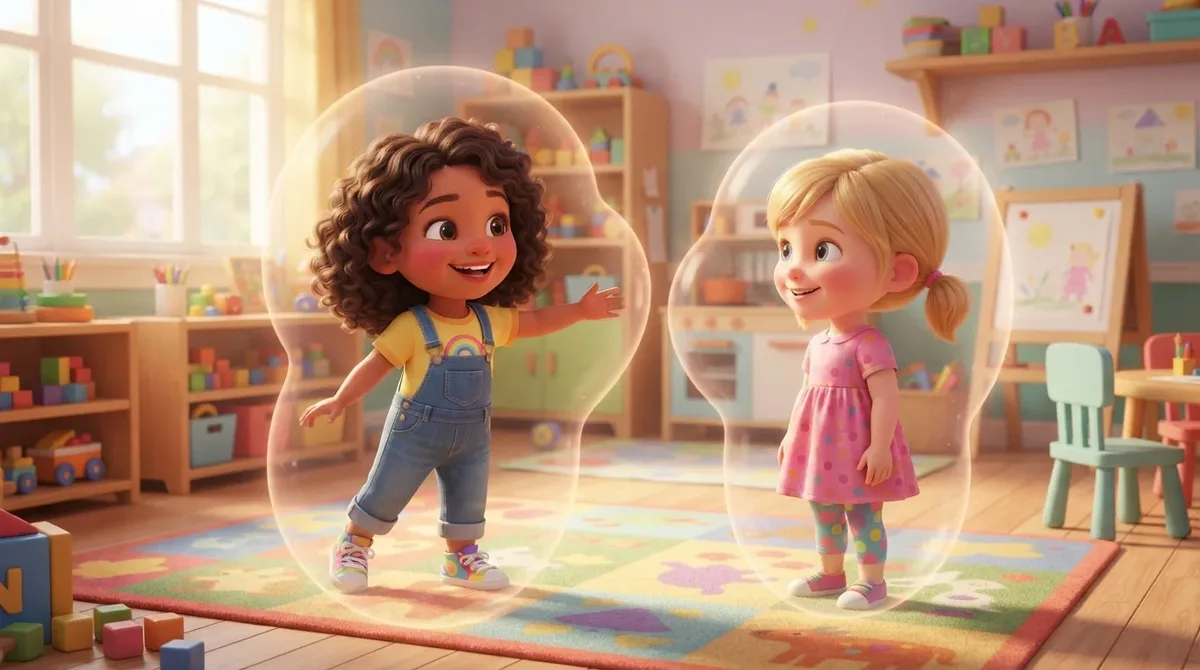
Sometimes I feel a big feeling. I might feel excited, or angry, or crowded.
When I feel a big feeling, my hands might want to grab or push.
When someone grabs or pushes, it can hurt. My friend might feel sad or scared.
Most of the time, people feel safe when hands stay gentle.
When my hands feel busy, I can try squeezing them tight, then letting go.
I can try folding my hands, or putting them in my pockets.
I can take three big breaths. In, and out. In, and out. In, and out.
I can use my words. I can say, "Stop, please," or "That is mine."
I can ask a grown-up for help. Grown-ups like to help.
Sometimes I forget, and my hands move fast. That is okay. I can say sorry and try again.
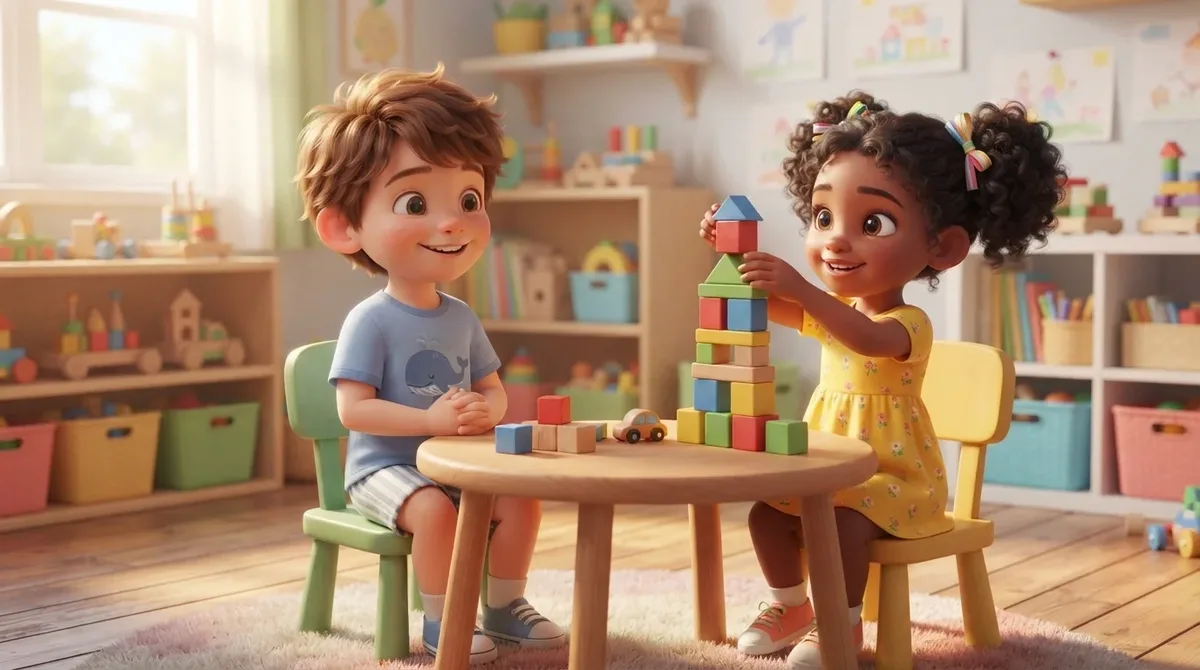
My hands are calm and kind. I can play with my friends, and everyone feels safe.
Notice the story starts with what hands are good at. That small choice tells the child their hands are not the problem. They just need a plan for big moments.
Tips for reading it
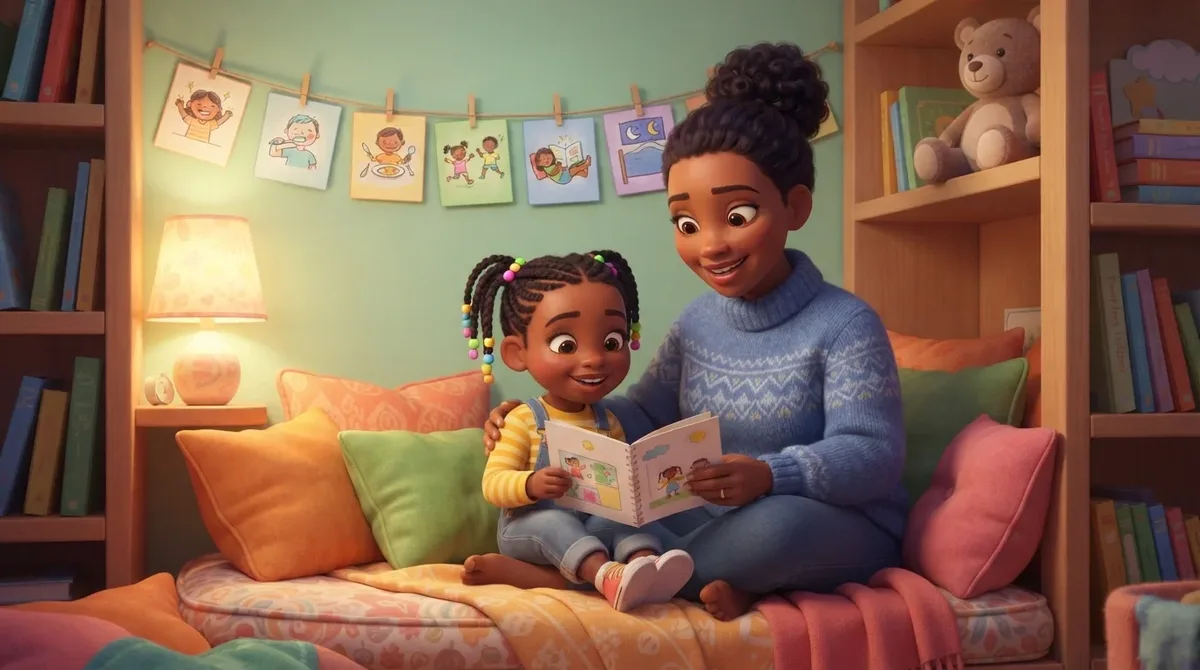
Read it at a calm time, read it often, practice the moves together, and never read it as a consequence.
- Choose a calm moment. Bedtime, a quiet afternoon, a slow car ride. Reading it right after a push turns it into a lecture and makes the story feel like a punishment.
- Repeat it. Read it daily for a week or two, and keep going after things get better. Repetition is where the rehearsal happens.
- Practice the moves. Squeeze and let go. Fold hands. Three slow breaths. Try them together while you read, so the body knows them too.
- Borrow the story's words. "Squeeze and let go" is easier to hear in a tense moment than "stop that," because your child has practiced it.
- Notice gentle hands out loud, simply. "You folded your hands while you waited." Plain description is enough. You do not need prizes.
- Bring in your child's team. If your child has a teacher, therapist or occupational therapist, share the story with them. Using the same words at home and at school helps, and they may suggest tweaks that suit your child.
Free printable hands-to-self stories are a reasonable start, and plenty of teacher and therapy resource sites offer them. They are quick and the structure is usually sound. The gap is that the child in the pictures is not yours, and neither is the playground.
Making one starring your child with WonderCast
You type one sentence about the situation, and WonderCast writes and illustrates a short, calm story starring your child, by name and by look.
The example on our product page is close to this exact topic: "When Eli feels angry, he squeezes his hands, takes three big breaths, and asks a grown-up for help." Use your child's name and add your own details, like a sibling's name or the block corner at preschool.
- Read together or listen. Read it as a storybook or play it as an audiobook. Every word lights up as it is read.
- Your voice, if you like. On the Creator and Studio plans, a grown-up can record about 30 seconds of their voice and hear the story narrated in it. Only a grown-up can record a voice; recording a child's voice is switched off.
- No photo needed. A written description is enough. If you add a photo, it is deleted once the character is made and never used to train AI.
- Gentle by design. A Safety Agent screens every prompt, and stories resolve through kindness, with no scary or shaming beat. Details are on the safety page.
- Fix a page. If one scene is not right, regenerate just that scene.
Six stories are free to read with no account in the story library. The free plan makes and keeps 10 storybooks and 10 audiobooks. Paid plans are Starter at $9.99, Creator at $19.99 and Studio at $29.99 a month; see pricing. WonderCast runs on iPhone, iPad, Apple TV and the web; there is no Android app.
For other everyday moments, the social stories page has more ideas, and a social story for potty training uses the same calm shape for the bathroom.
Frequently asked questions
What is a social story for keeping hands to self? It is a short, first-person story that describes the moments when a child's hands want to grab or push, explains kindly how others feel, and offers a few calm things to try, like squeezing hands, taking three breaths or asking a grown-up for help. Social stories were developed by Carol Gray in 1991 and are widely used by teachers and occupational therapists.
Should I read the story right after my child hits or pushes? It is better not to. In that moment your child is upset, and the story will feel like a punishment. Handle the moment simply and calmly, then read the story later at a quiet time, such as bedtime. You can use a short phrase from the story, like "squeeze and let go," in the moment instead.
What can I give my child to do with their hands? Simple, concrete options work best: squeeze and release, fold hands, hands in pockets, a high five, or holding a small fidget. Pick two or three and use the same ones every time so they become familiar. Your child's teacher or occupational therapist may have ideas that suit your child.
Do social stories help autistic children keep their hands to themselves? Social stories began in autism support, and teachers and occupational therapists widely use them for exactly this kind of skill. Every child is different, so it is worth asking your child's teacher or therapist how to adapt the story. Our post on social stories for autism covers the format in more depth.
How long should the story be? Short enough to read twice in a row without losing your child's interest, which usually means eight to twelve short lines. If your child asks for it again, it is the right length.
Start tonight
You do not need a new reward chart. Read the story above tonight, practice squeezing and letting go together, and read it again tomorrow. When you want a version where your own child is the one with calm, kind hands, the social stories page is the place to start.