A social story for feeling angry is a short, calm, first-person story that names anger, says it is okay to feel it, says hurting is not okay, and gives a child a few safe things to do: say "I am angry," stomp in one spot, squeeze a pillow, breathe, or ask for help. It is read on a calm day, so the steps are already familiar the next time anger shows up.
If your child yells, throws or stomps when they are mad, you are in very ordinary company. Anger is a normal feeling, and young children feel it in the whole body before they have words for it. An angry child is not a bad child.
What this social story is for
An anger story separates the feeling from the action: feeling angry is okay, hurting is not, and here are safe things to do.
Young children often hear "stop that" when they are angry, and it is easy for them to decide that the anger itself is the problem. The story below draws the line in a different place. The feeling is allowed. Hitting, kicking and throwing things at people are not. In between, there is a short list of safe things an angry body can do.
Social stories were developed by Carol Gray in 1991 as short, plain descriptions of a situation, shared ahead of time. WonderCast is not affiliated with Carol Gray or The Gray Center; we use "social story" in the everyday sense parents and teachers do. Our guide to social stories for autism covers the format in more depth.
The first step in the story is naming. "I am angry" is a small sentence, and it gives a child something to do with their voice besides yell. The second step is choosing. The story offers a few calm-down steps and lets the child pick one.
This story is for anger with a clear cause: a sibling knocked the ramp down, the game was lost, it is someone else's turn. For the bigger flood, when a child is past words and on the floor, a social story for big feelings and tantrums is the gentler place to start. If anger usually comes out through hands, pair this one with a social story for keeping hands to self.
What to include
Describe the feeling in the body, name it, say it is okay, draw the line at hurting, and give safe steps to choose from.
- Your child's name and a real cause. "When my brother knocks down my ramp" is easier to picture than "when I get mad."
- What anger feels like. A hot face, tight fists, a loud voice, fast feet.
- The word itself. "That feeling is called angry."
- A plain line that anger is okay. "Everybody feels angry sometimes."
- The line at hurting. One sentence, without blame: "It is not okay to hit, kick or throw things at people."
- Words to say. "I am angry" and "I need help."
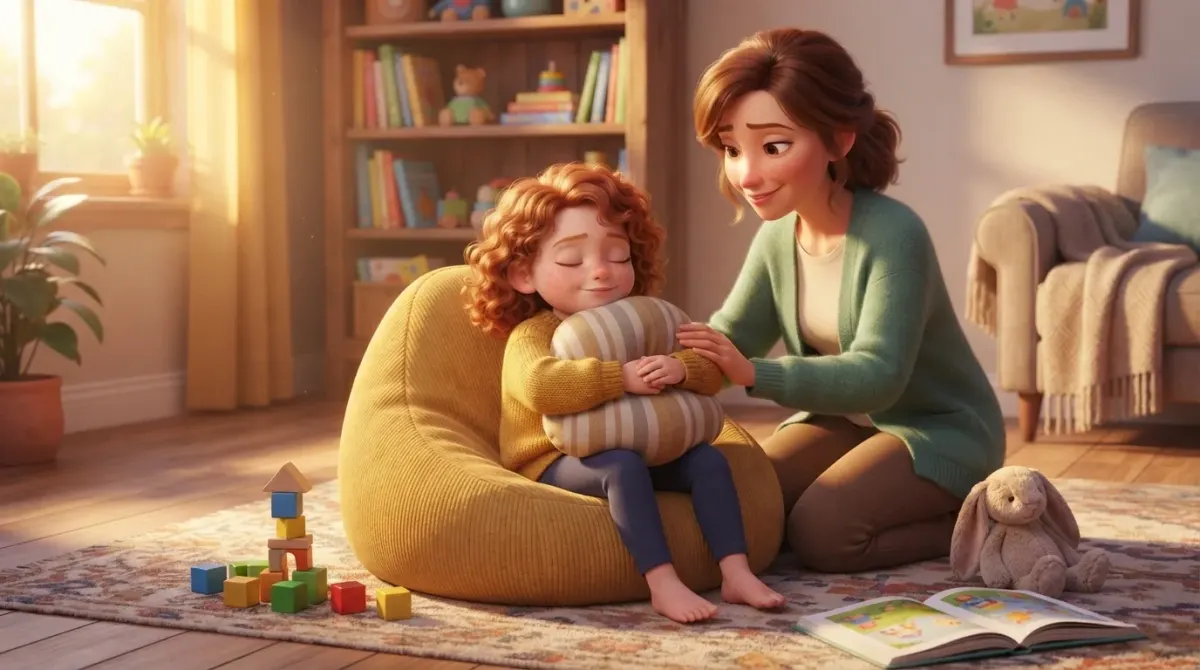
- Safe things for the body. Stomp in one spot, squeeze a pillow, push on the wall, take slow breaths.
- A choice. In the story, the child chooses their own calm-down step.
- What happens after. When the body is calm, a grown-up helps with the problem that started it.
- A line for hard days. "Sometimes I forget. That is okay. I can try again."
A ready-to-read social story for feeling angry
Swap in your child's name, the things that make them angry and the calm-down steps they like. One line per page works well if you are making a booklet.
Jamal Feels Angry
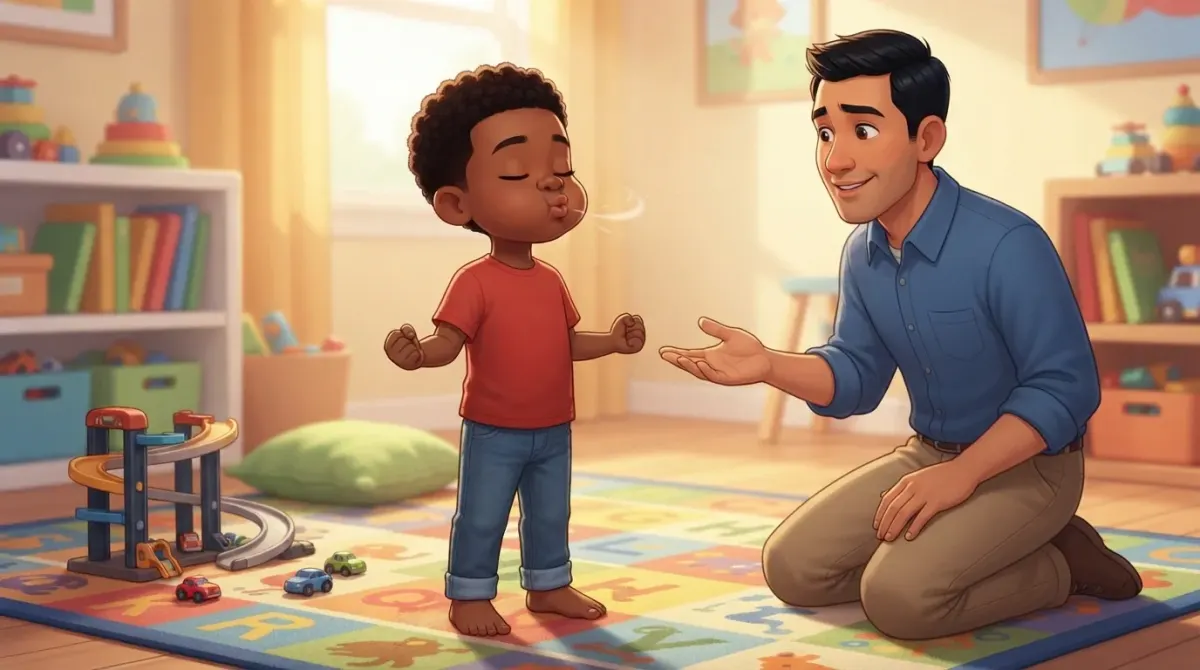
My name is Jamal. I like racing my cars and building ramps.
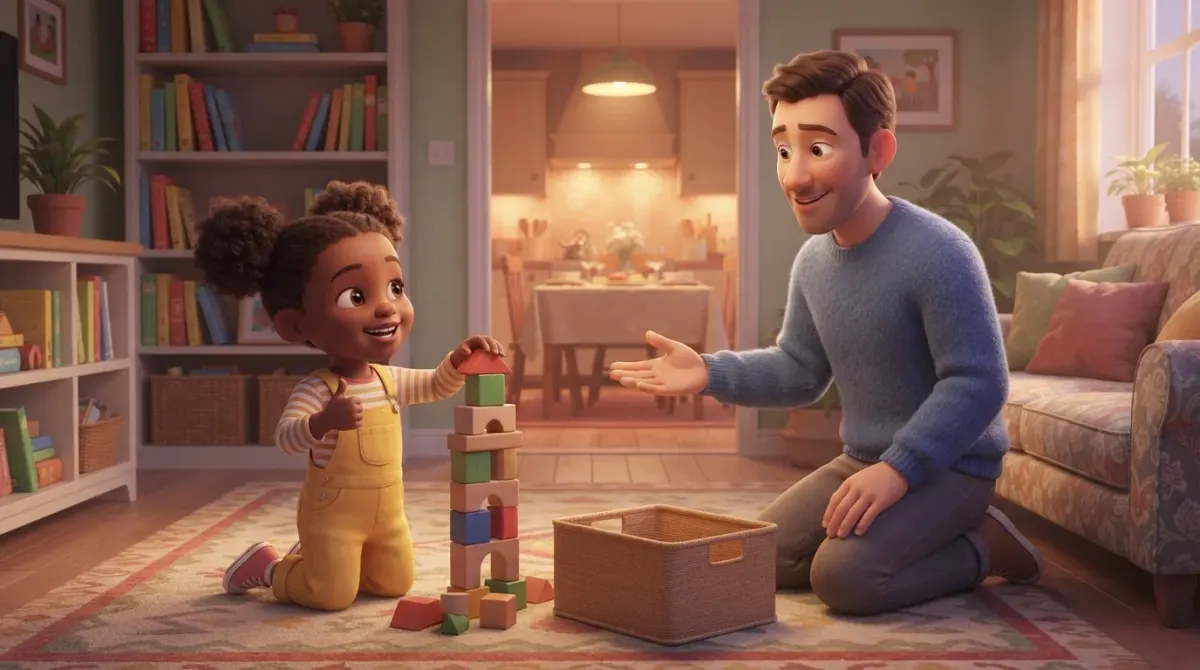
Sometimes things happen that I do not like. Sometimes my brother knocks down my ramp.
Then my face feels hot, and my hands make tight fists.
That feeling is called angry.
Everybody feels angry sometimes. It is okay to feel angry.
It is not okay to hit, kick or throw things at people. Hurting is not okay.
When I feel angry, I can use my words. I can say, "I am angry."
Then I can choose a calm-down step.
I can stomp my feet ten times in one spot.
I can squeeze my pillow or push hard on the wall.
I can take slow breaths, like blowing up a big balloon.
I can ask a grown-up, "Can you help me?"
Sometimes I forget, and I yell or throw. That is okay. I can say sorry and try again.
When my body is calm, my grown-up helps me with the problem. Then I can play again.
Notice the story gives Jamal two separate sentences: "It is okay to feel angry" and "Hurting is not okay." It never tells him to stop being angry. It names the feeling, then hands him a choice of safe steps.
Tips for reading it
Read it at a calm time, let your child choose their steps, and say the feeling's name out loud when you see it.
- Choose a calm moment. A quiet afternoon, bath time, bedtime. Reading it right after an outburst turns it into a lecture.
- Let your child choose the steps. Try each one together and keep the two or three they like. Draw them on a card and put it where your child can see it.
- Practice with pretend anger. Make angry faces in the mirror, say "I am angry" in a big voice, then stomp ten times. Practiced when nobody is mad, it is a game.
- Name it when you see it. "You look angry. Your ramp fell down." Hearing the word from you gives your child a word to use next time.
- Keep the limit short. "I won't let you hit. You can stomp or squeeze." One sentence for the limit, one for the choice.
- Come back to the problem. The reason for the anger is often a fair one. Once everyone is calm, go back and help with the ramp, the turn or the game.
- Name your own. "I am feeling frustrated. I am going to take a slow breath." Children watch what grown-ups do with anger.
- Bring in your child's team. If your child has a teacher, speech therapist or occupational therapist, share the story with them so the words and the steps match at home and at school.
Making one starring your child with WonderCast
You type one sentence about the situation, and WonderCast writes and illustrates a short, calm story starring your child, by name and by look.
A prompt like "Jamal feels angry when his brother knocks down his ramp, so he says he is angry and stomps his feet ten times" is enough. Add your own details: the thing that sets it off, the calm-down step your child chose, the grown-up who comes to help.
- Read together or listen. Read it as a storybook, or play it as an audiobook.
- No photo needed. A written description of your child is enough to make their character.
- A calm setting. Every story request goes through a safety check, and WonderCast is 100% ad-free.
WonderCast comes with 10 free books, so you can try an anger story and a few others before choosing a plan. The social stories page has ideas for more everyday moments.
For a wider look, see our comparison of the best bedtime story apps for kids and our guide to personalized bedtime story apps.
Frequently asked questions
What is a social story for feeling angry? It is a short, first-person story that names anger and describes how it feels in the body. It says that feeling angry is okay and hurting is not, and it gives a child words to say and a few safe calm-down steps to choose from.
What are safe ways for a child to let anger out? Common choices are stomping in one spot, squeezing a pillow, pushing against a wall, taking slow breaths, or going to a quiet spot. Let your child try each one on a calm day and pick their favorites. The story above uses four, and you can swap in your own.
How is this different from a tantrum story? This story is about naming anger and choosing a step, for moments when a child still has some words. A tantrum story is for a bigger flood of feeling, and it centers on comfort: breathing, a hug, a calm corner. Many families keep both.
When should I ask for help with my child's anger? If outbursts are very frequent, if your child often hurts themselves or others, or if you are worried, talk to your pediatrician or your child's teacher. They know your child and can suggest next steps.
Can I use this story with an autistic child? Yes. Social stories began in autism support and are widely used by teachers, speech therapists and occupational therapists. Every child is different, so ask your child's team how to adapt the words and which calm-down steps suit your child.
Start on a calm afternoon
Read the story today, try the calm-down steps together, and let your child choose two for their card. When you want a version with your own child and the moments that make them angry, start on the social stories page.