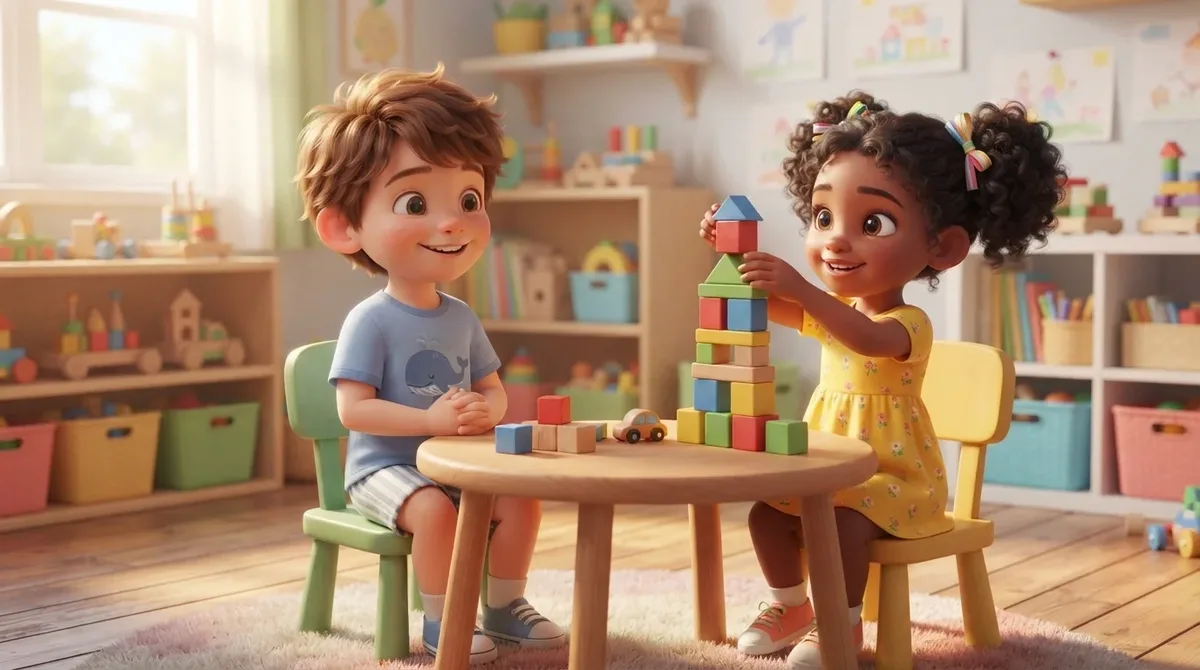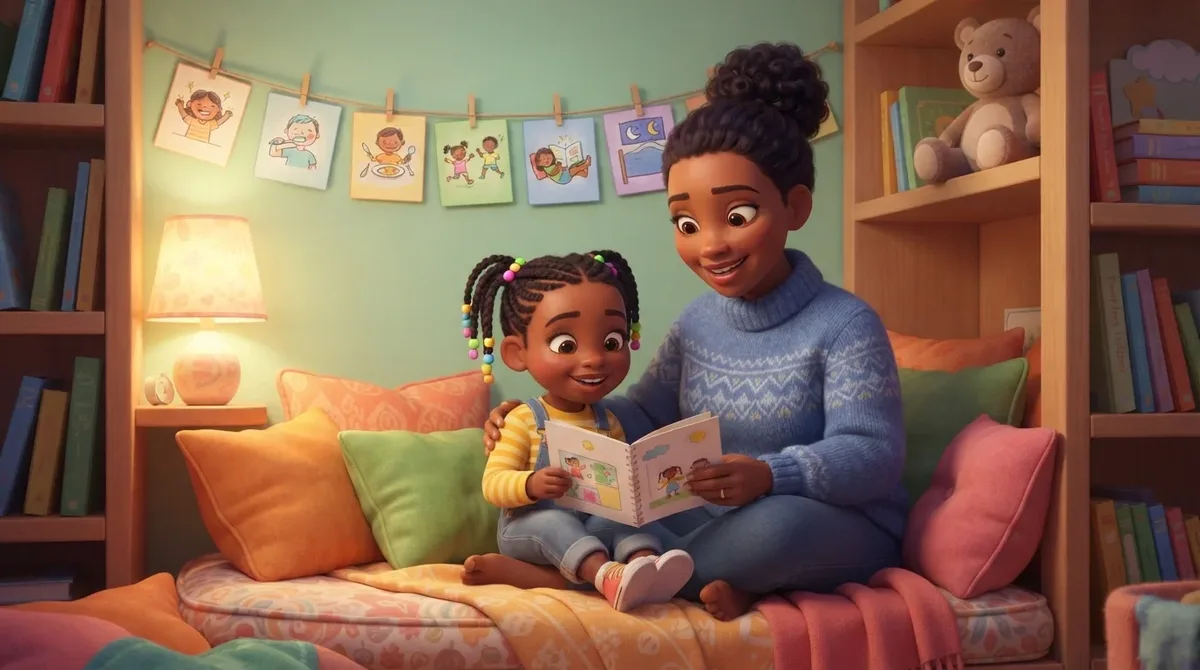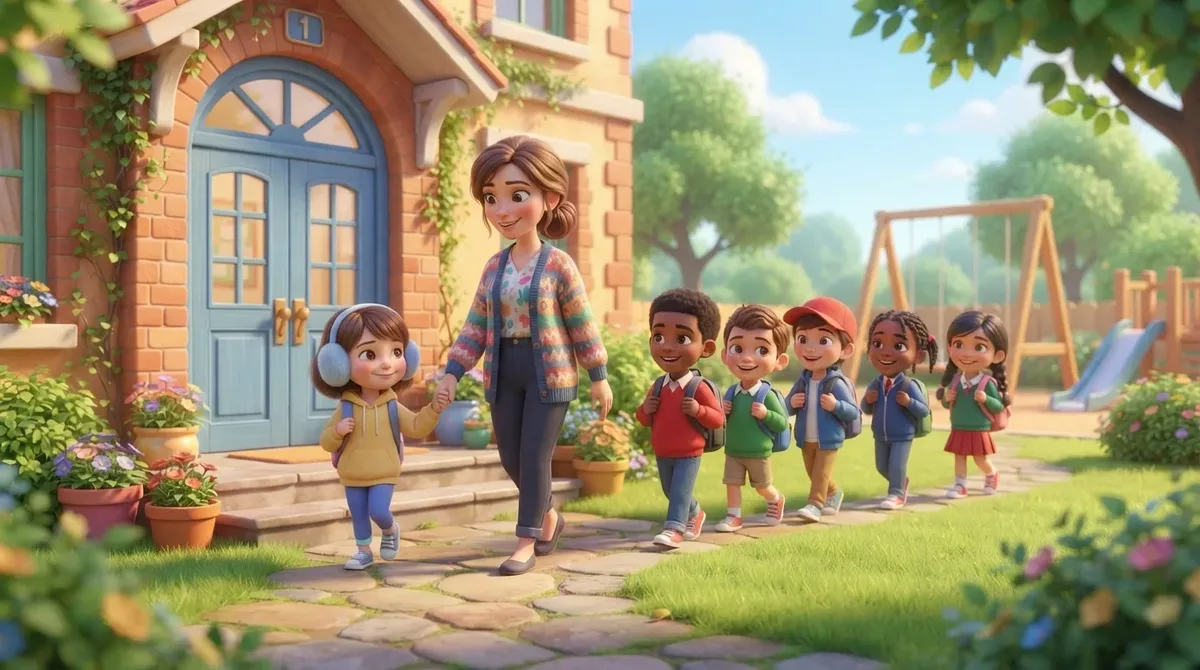
A social story for personal space is a short, calm, first-person story that shows a child what "too close" looks and feels like, and what they can do instead, before the moment comes up again at circle time or in the lunch line. It works because the child gets to practice the idea when nobody is upset, which is very different from being pulled back by the arm in the middle of a game. The versions that land best use the child's own name and the places they actually spend their day.
If your child hugs every classmate a little too hard, stands nose to nose when they talk, or leans on whoever is nearest: this is common, it is not rudeness, and it does not mean anyone has failed. Many young children simply have not learned yet where other people's space begins. That is a skill, and skills can be practiced.
What a personal space social story is for
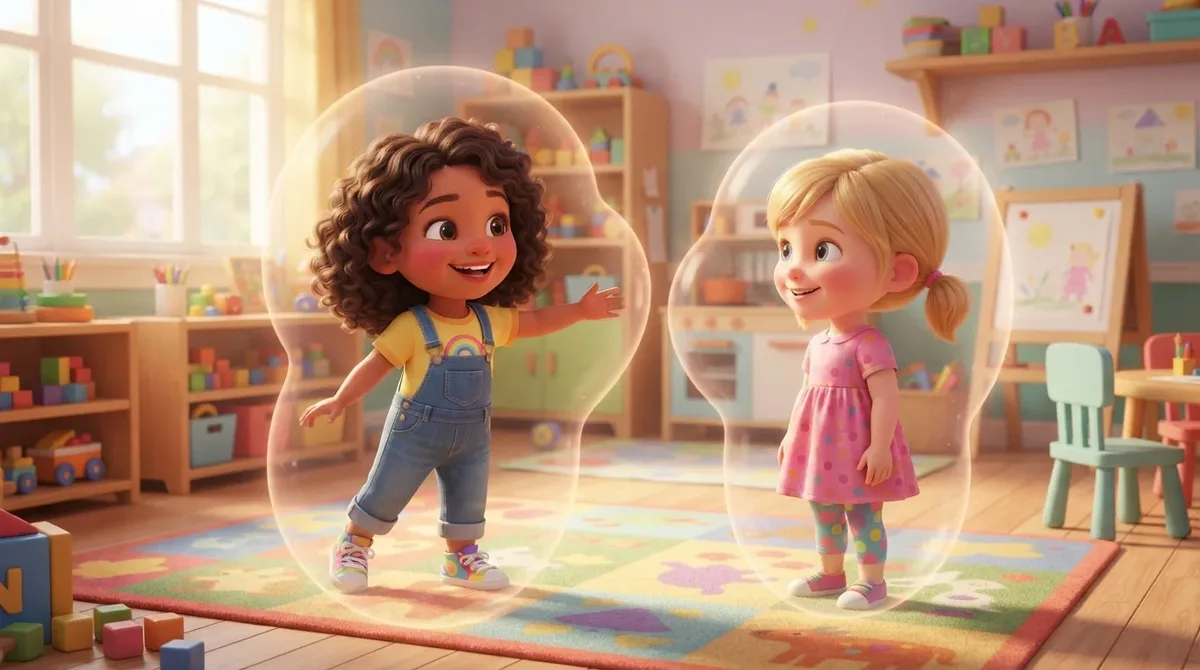
A personal space social story explains, in plain words, that everyone has a little bubble of space around their body, and shows a child a few calm ways to respect it.
Social stories were developed by Carol Gray in 1991 as short, descriptive narratives that prepare a child for a specific situation by describing it plainly and positively ahead of time. They began in autism support and are now widely used by teachers and occupational therapists with all kinds of young children, because the core idea fits almost any child: a lot of what looks like a behavior problem is really a gap in information.
Personal space is a good example. "Give him some space" means nothing to a four-year-old who cannot see the space. A story can make it visible. It can name the bubble, say where it is, describe how a friend might feel when someone is too close, and give the child something concrete to do, like stretching out an arm to check the distance. It does all of this while nothing is happening, so the child can take it in without feeling corrected.
If your child also grabs, pushes or pats when excited, the sister post, a social story for keeping hands to yourself, covers that side of it. The two pair well.
What to include
Keep it short, first-person, present-tense and kind. Describe the space, the feeling, and one or two things the child can try. Leave out warnings and consequences.
- Your child's name. "Maya stands an arm away," not "the child." The name is what helps a child see themselves in the story.
- A picture of the bubble. Give the space a simple image: a bubble, a hula hoop, a little circle around the body. Young children understand a thing they can imagine holding.
- The real places. Circle time on the rug, the lunch line, the couch with a cousin. Name the spots where it actually comes up for your child.
- How other people might feel. One or two perspective sentences, such as "When someone is very close, my friend might feel squished." Keep it gentle and true, never blaming.
- One or two clear things to try. An "arm's length" check, asking "Can I have a hug?", or waving hello instead. Phrase them as "I can try," not "I must."
- A line that it is okay to forget. "Sometimes I forget. That is okay. I can take a step back." Children shut down when they feel caught.
- A calm, warm ending. Finish on the child feeling comfortable and still close to their friends. Space is not the same as being pushed away, and the ending should say so.
What is not on the list: rewards, sticker charts, "if you do this again" lines, or anything that makes the child sound bad. Keep the story about understanding the space and feeling okay.
A ready-to-read personal space social story
Swap in your child's name and your own places. Read it slowly, one line per page if you are making a little booklet.
Maya and Her Space Bubble
My name is Maya. I go to school, and I play with lots of friends.
Everybody has a bubble of space around their body. I cannot see it, but it is there.
My bubble is about as big as my arm. My friends have bubbles too.
Sometimes I am excited, and I get very close to a friend. My friend might feel squished.
Most people feel comfortable when there is a little space between us.
I can try stretching out my arm. If my hand does not bump my friend, that is a good space.
At circle time, I can try sitting on my own spot on the rug.
In the line, I can try standing one step behind the person in front of me.
If I want a hug, I can ask, "Can I have a hug?" My friend can say yes or no, and both are okay.
Sometimes I forget about bubbles. That is okay. I can take a step back.
When I give my friends their space, we can still play and laugh together.
My bubble and my friends' bubbles all fit in the room. I feel calm and happy.
That last line matters more than it looks. It tells your child that respecting space is not about being sent away. It is about everyone being comfortable together.
Tips for reading it
Read it at a calm time, read it often, and never use it as a punishment.
- Pick a quiet moment. Bedtime, the car, a slow breakfast. The worst time to read it is right after someone has been bumped into, because then it becomes a lecture.
- Read it every day for a week or two. The effect comes from repetition. If your child asks for it again, that is a good sign.
- Act out the arm check together. Stand up, stretch out arms, find the spot where hands just miss. Let your child check your bubble too. It turns an abstract idea into something they can feel.
- Use the story's words in real life. A soft "bubble check" at the park is easier to hear than "back up," because your child already knows what it means.
- Do not change the ending to make a point. Keep it warm every time. A story that sometimes ends with a scolding stops feeling safe to read.
- Talk to your child's team. If your child has a teacher, therapist or occupational therapist, show them the story. They may want to use the same words at school, and they know your child's needs well.
Free printable personal space stories are a fine place to start, and many teacher and therapy resource sites offer them. The structure is usually solid. The trade-off is that the child on the page is somebody else, in somebody else's classroom.
Making one starring your child with WonderCast
You type one sentence about the situation, and WonderCast writes and illustrates a short, calm story with your child as the hero, by name and by look.
A prompt might be: "When Maya feels excited, she stretches out her arm to check her space bubble, asks before she hugs, and still plays happily with her friends." Add your own details, like the rug at school or a favorite cousin, and they can show up in the story.
- Read it together, or play it as an audiobook. Every word lights up as it is read, which helps early readers follow along.
- Hear it in your own voice. On the Creator and Studio plans, a grown-up can record about 30 seconds of their voice and the story is narrated in it. Only a grown-up can record a voice; recording a child's voice is switched off.
- No photo needed. A written description is enough to create your child's character. If you add a photo, it is deleted once the character is made and never used to train AI.
- Calm by design. A Safety Agent screens every prompt, and stories resolve through kindness, with no scary or shaming beat. You can read more on the safety page.
- Change a page you do not like. If a scene is not right, regenerate just that scene.
Six stories are free to read with no account in the story library. The free plan makes and keeps 10 storybooks and 10 audiobooks. Paid plans are Starter at $9.99, Creator at $19.99 and Studio at $29.99 a month, listed on the pricing page. WonderCast works on iPhone, iPad, Apple TV and the web; there is no Android app.
The same story shape works for many other moments. The social stories page has more ideas, and if you are also tackling the bathroom, see a social story for potty training.
Frequently asked questions
What is a personal space social story? It is a short, first-person story that explains the idea of personal space in simple terms, often as a bubble around the body, and shows a child a few calm things to try, like keeping an arm's length or asking before a hug. Social stories were developed by Carol Gray in 1991 and are widely used by teachers and occupational therapists.
What age is a personal space social story for? Most are written for children around three to eight, but the right age depends on the child more than the birthday. Use short sentences for younger children and add a little more detail, like specific places at school, for older ones.
How do I teach personal space to a child who loves hugs? Do not try to stop the hugs. Teach asking first. A line like "If I want a hug, I can ask" gives an affectionate child a way to keep being affectionate while respecting other people. Practice the question together and model it yourself by asking before you hug them.
Are personal space social stories only for autistic children? No. They began in autism support, and many autistic children find them helpful, but any young child who is still learning about space can benefit. If you are looking specifically at autism, our post on social stories for autism goes into more depth. Your child's teacher or therapist can also suggest what suits your child.
How long before a social story helps? It varies, and there is no set timeline. Plan to read it daily for at least a week or two before expecting much change, and keep reading it after things improve. If nothing seems to shift after a few weeks, it is worth asking your child's teacher or therapist for ideas.
Start tonight
You do not need a new rule or a new chart. Read the story above tonight at bedtime, do the arm check together, and read it again tomorrow. If you would like a version where your own child is the one on every page, you can browse more ideas on the social stories page and make one in a few minutes.