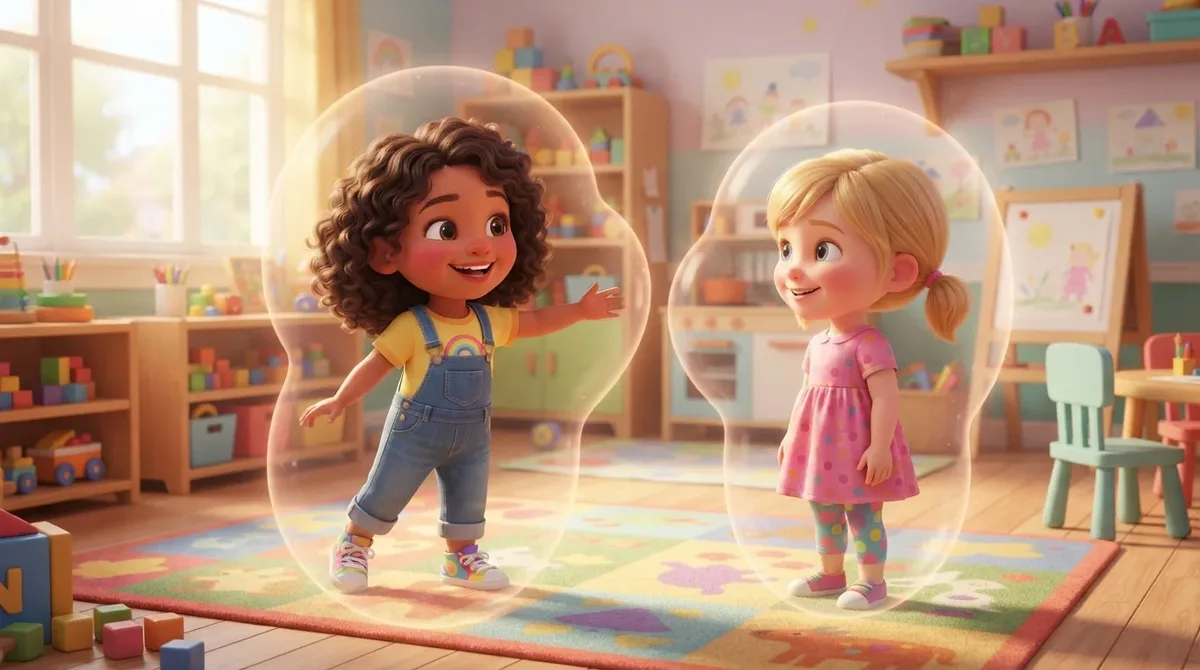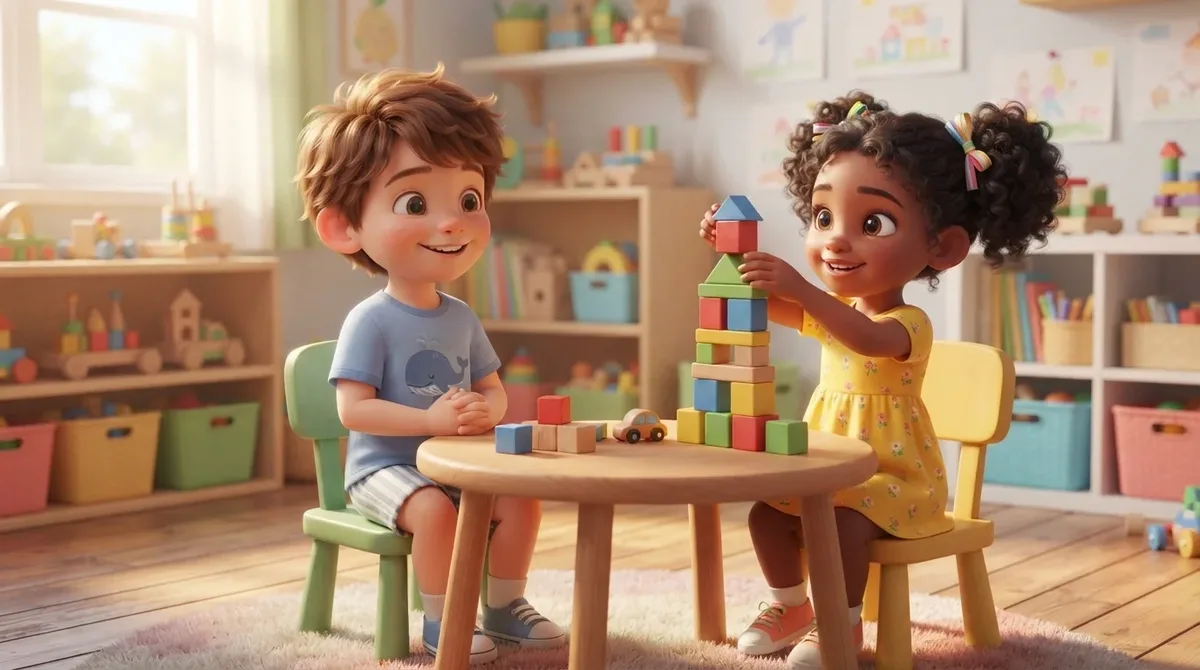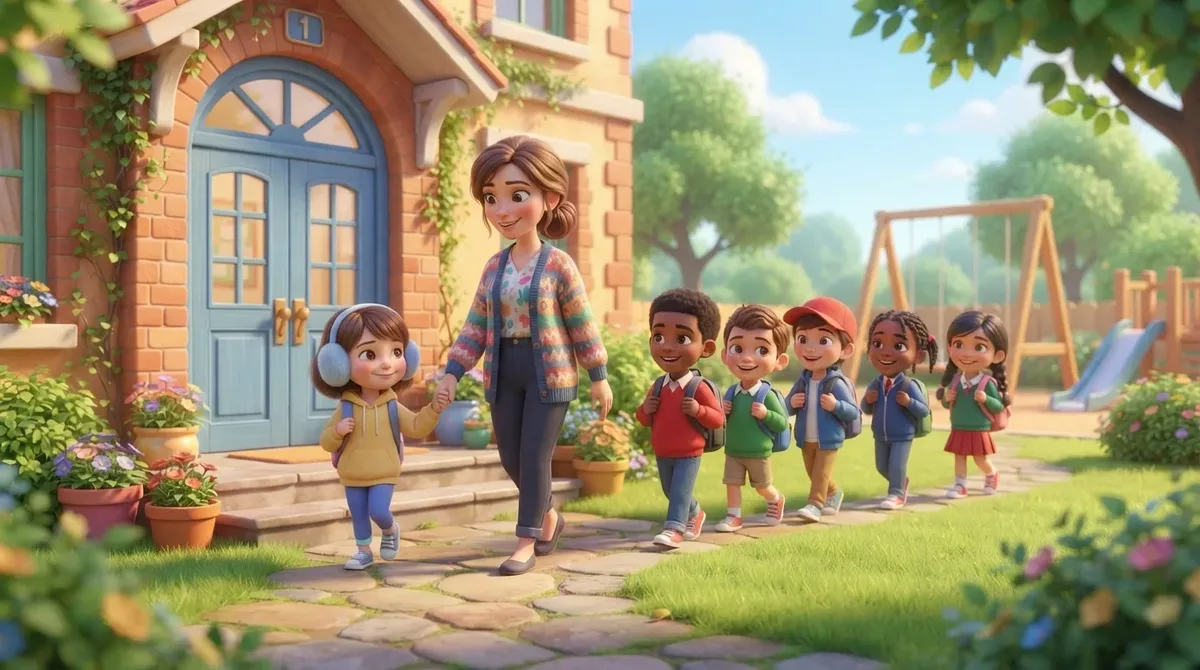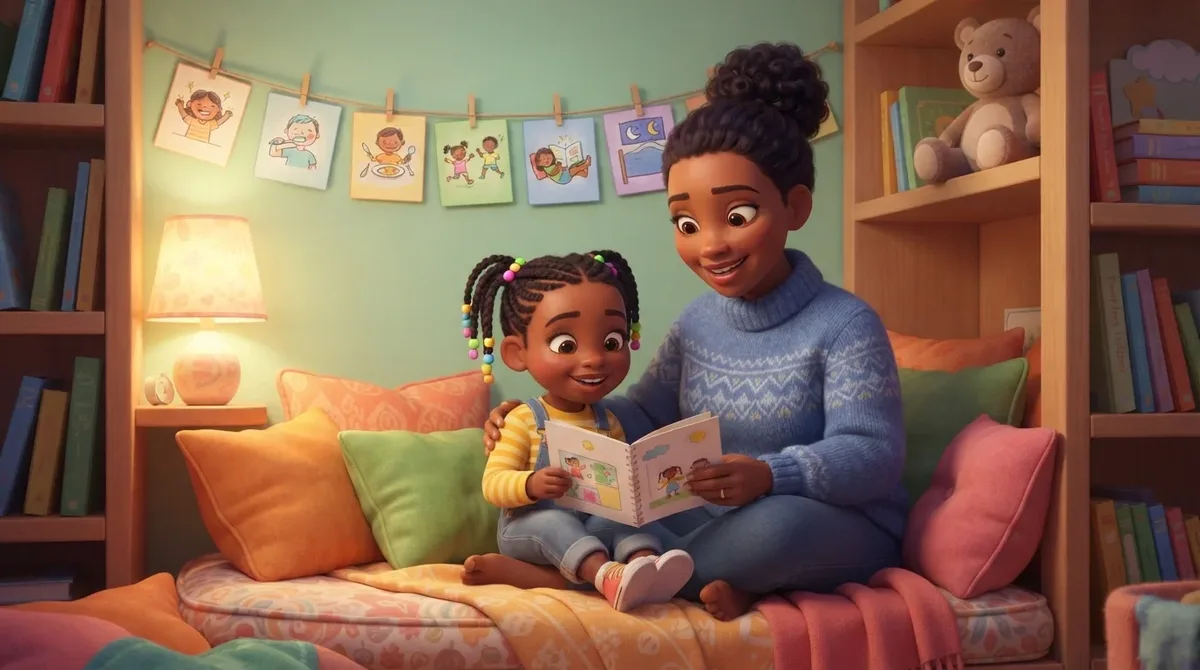
A social story is a short, calm, first-person story that describes a specific situation before it happens: what will happen, who will be there, what it might feel like, and what usually comes next. For many autistic children, knowing the shape of a situation in advance makes it easier to face. You do not need special training to write one. You need the situation, a few honest details, and a quiet moment to read it together.
This guide covers what a social story is, the kinds of sentences it uses, a template you can fill in, three complete examples, and how to write and use your own. It also links to stories on specific topics, like fire drills, potty training and personal space.
What is a social story?
A social story is a short narrative, developed by Carol Gray in 1991, that describes a situation plainly and positively so a child can understand it ahead of time.
Gray created social stories in her work with autistic students. The idea is simple. Many situations come with unwritten rules and unspoken expectations. A social story writes them down, in clear language, from the child's point of view.
A good social story does not tell a child they are doing something wrong. It shares information. It describes what happens, why it happens, and what people often do. It is closer to a friendly guidebook than a set of instructions.
Social stories are now used widely by parents, teachers, speech therapists and occupational therapists, for autistic children and for any child facing something new.
The kinds of sentences in a social story
Most social stories mix sentences that describe the situation with a smaller number that gently suggest what the child might do.
You will see these sentence types described in many guides. You do not need to label them while you write, but knowing them helps you keep the balance right.
- Descriptive sentences say what is happening, plainly and accurately. "At the barber shop, there is a big chair." "My class has a new teacher today."
- Perspective sentences describe what other people might think or feel. "The barber wants my hair to look nice." "My teacher is happy to see the class."
- Directive or coaching sentences suggest a response, softly. "I can try to sit still." "I can ask for a break." Words like "can" and "might" leave room for the child.
- Affirmative sentences reassure or state something shared and true. "Lots of people get haircuts. That is okay."
The important thing is the balance. A story that is mostly description, with a few gentle suggestions, reads as information. A story that is mostly instructions reads as a list of demands, and that is not what a social story is for.
A social story template you can fill in
Copy this, fill in the brackets, and cut anything that does not fit your child's situation.
[Name] and [the situation]
Sometimes I [go to / have / do] [the situation].
It happens at [place]. [Person or people] will be there.
First, [what happens first].
Then, [what happens next].
It might feel [loud / new / strange / long]. That is okay.
[Person] wants to [help me / keep me safe / have a nice time with me].
If I feel [worried / upset / tired], I can [a calm strategy: take slow breaths, hold my toy, ask for a break, cover my ears].
Then, [what happens last].
When it is finished, I [go home / go back to class / have my snack].
I did [the situation]. [A calm, true ending sentence.]
A few things to keep in mind as you fill it in:
- Use "I" and the present tense, so the child is the one doing it.
- Keep each sentence short. One idea per line.
- Use the real place, real people and real objects when you can.
- Say "usually" or "sometimes" for things that might change. If a story promises the dentist is always quick, the slow day will feel like a broken promise.
Three example social stories
Each example below is complete and ready to read. Change the names and details to match your child.
Example 1: Getting a haircut
Sam Gets a Haircut
Sometimes my hair gets long. Then it is time for a haircut.
I go to the barber shop with Mom.
At the barber shop, there is a big chair. I sit in the chair.
The barber puts a cape around me. The cape keeps the little hairs off my clothes.
The barber uses scissors. Sometimes the barber uses clippers. Clippers buzz and feel tickly.
The barber wants my hair to look nice.
I can hold my toy car while I sit.
If I need a break, I can say, "Break, please."
The barber might spray a little water. It feels cool.
When the haircut is finished, the barber takes off the cape.
I look in the mirror. My hair is shorter.
Then Mom and I go home.
Example 2: A substitute teacher
Ava Has a Different Teacher Today
Most days, my teacher is Ms. Lee.
Sometimes Ms. Lee cannot come to school. Then a different teacher comes.
The different teacher is called a substitute teacher.
Ms. Lee will come back another day.
The substitute teacher has a different name and a different voice. That is okay.
The substitute teacher wants to help our class have a good day.
My classroom is the same. My desk is the same. My friends are the same.
Some things might happen in a different order. If I am not sure what comes next, I can look at the schedule or ask.
I can say, "What are we doing next?"
At the end of the day, I go home.
Another day, Ms. Lee comes back.
Example 3: Waiting for a turn
Leo Waits for a Turn
At the playground, there is one slide.
Lots of children want to go on the slide.
When lots of people want the same thing, we take turns.
Taking a turn means one person goes, then the next person goes.
Sometimes I need to wait for my turn.
Waiting can feel long. That is okay.
While I wait, I can count to ten. I can watch the other children slide down.
The other children are waiting too.
Then it is my turn. I climb up and slide down.
After my turn, someone else has a turn.
I can go to the back of the line and wait again.
Taking turns means everyone gets to play.
How to write a social story, step by step
Pick one situation, watch what really happens, and write it down from your child's point of view in short, calm sentences.
- Choose one situation. Pick something specific and coming up soon: the dentist next week, a new bus route, a birthday party. One story per situation keeps it clear.
- Find out the details. Visit, ask, or remember what actually happens. Who is there? What does it sound like? What happens first, and what happens last? A teacher, speech therapist or occupational therapist who knows the setting can fill in what you do not know.
- Think about what your child might find hard. The noise, the waiting, the change in routine, not knowing when it ends. Make sure the story covers that part plainly.
- Write it with your child, where you can. Ask what they already know and what they wonder about. Use their words. A story you make together belongs to them.
- Write in first person and present tense. "I sit in the chair," not "You must sit in the chair."
- Describe more than you direct. Most lines should say what happens. Only a few should suggest what your child might do, using "I can" or "I might."
- Include one calm strategy. Something your child already uses: slow breaths, a favorite object, a break card, covering ears.
- End calmly. Finish with the situation over and the day carrying on. No reward, no warning.
- Add pictures. Photos of the real place, simple drawings, or illustrations help many children follow along.
- Read it yourself out loud. If any line sounds like a lecture or a threat, rewrite it.
How to use a social story
Read it before the situation, at a calm time, and read it many times.
- Read before, not during. A social story is preparation. Reading it in the middle of a meltdown or a hard moment turns it into an instruction, and your child is unlikely to take it in. Bedtime, breakfast or a quiet afternoon all work.
- Repeat it. Read it daily for a week or so before the event. Familiar words are comforting, and a child who knows the story well can recall it later.
- Use visuals. Pictures carry a lot of the meaning for many children. Real photos of the place, a laminated copy, or an illustrated version all help.
- Keep it available. Some children like to look at it on their own. Leave it on a shelf, in a backpack, or on a tablet.
- Share it with others. Give a copy to the teacher, grandparent or babysitter so everyone uses the same words.
- Update it. If something changes, change the story. If the story did not match what happened, fix the part that was wrong.
Writing respectfully: with your child, not at them
A social story should describe the world to your child, not try to fix them.
This matters more than any template. A few principles:
- Write it with the child, not to them. Involve them in choosing the topic, the strategies and the pictures, as much as they want to be involved.
- Describe, don't demand. "Most people wait in line" shares information. "I must not push" sounds like a rule with a punishment attached.
- Avoid shame. Do not write about how a behavior upsets other people in a way that makes your child feel bad. Leave out "bad," "naughty," and "should have."
- Respect real needs. If your child covers their ears because a sound hurts, the story should support that, not try to stop it. A story about haircuts can say the clippers buzz; it does not need to pretend they do not.
- Leave out rewards and consequences. Sticker charts and warnings belong somewhere else, if anywhere. The story is about understanding.
- Be honest. Don't promise things that might not happen.
Your child's teacher, speech therapist or occupational therapist can be a good partner here. They often know the setting, the language the child already uses at school, and which strategies are already familiar.
Social story topic ideas
Most social stories are about transitions, new places, sensory experiences, or everyday social situations.
Here are some common topics, including guides we have written:
- Using the potty: social story for potty training
- Personal space: social story about personal space
- Keeping hands to yourself: social story for keeping hands to self
- Fire drills and loud alarms: social story for a fire drill
- A new baby in the family: story about a new sibling for toddlers
- Going to the dentist or doctor
- Getting a haircut
- A substitute teacher or a new classroom
- Waiting for a turn
- Riding the school bus
- A birthday party
- Going to a restaurant or the grocery store
- Taking a plane trip
- Moving to a new house
You can find more on the social stories page.
Free printables, hand-written stories and personalized stories
Free printable social stories and stories you write by hand both work well, and many families use them first. Teacher and therapy resource sites offer printable stories on most common topics, and a story written on folded paper with your own drawings or photos costs nothing.
The main limitation of a printable is that it shows someone else's child in someone else's place. Writing in your child's name and real details helps a lot. Some children connect more strongly when the pictures show them too, and that is where a personalized story can help.
Making one starring your child with WonderCast
You type one sentence describing the situation, and WonderCast writes and illustrates a short, calm story starring your child, by name and by look. A prompt like "Mia hears the fire alarm at school, covers her ears, and walks outside with her class" is enough to get started. Add the real details from your notes and they will appear in the story.
- You can read it together, play it as an audiobook, or on the Creator and Studio plans hear it in a grown-up's own recorded voice. Recording takes about 30 seconds. Only a grown-up can record a voice; recording a child's voice is switched off.
- No photo is needed. A written description is enough. If you add a photo, it is deleted once the character is made and is never used to train AI.
- A Safety Agent screens every prompt. Stories resolve through kindness, with no scary or shaming moment. More detail is on the safety page.
- Every word lights up as it is read, so your child can follow along. If a page does not suit your child, you can regenerate that scene.
Six stories are free to read with no account at /stories. The free plan makes and keeps 10 storybooks and 10 audiobooks. Paid plans are Starter at $9.99, Creator at $19.99 and Studio at $29.99 a month; details are on the pricing page. WonderCast works on iPhone, iPad, Apple TV and the web. There is no Android app. You can see more examples on the social stories page.
Frequently asked questions
What is a social story for autism? It is a short, first-person story that describes a specific situation in clear, calm language before it happens. Carol Gray developed social stories in 1991 in her work with autistic students. They share information about what will happen and what people usually do, rather than giving orders.
How long should a social story be? Short enough that your child is happy to hear it again. For young children, that is often eight to fifteen short sentences. Older children may like longer stories with more detail. If your child loses interest, cut lines.
How often should I read a social story? Daily for a week or so before the situation is a good starting point, at calm times. Some children like to keep reading a familiar story long after the event. Follow your child's lead.
Do social stories need pictures? Not always, but many children find pictures helpful. Photos of the real place, simple drawings or illustrations all work. Choose whatever your child finds easiest to understand.
Can I write a social story for an older child? Yes. Use more detail, more mature language and visuals that suit their age. Older children can often help write their own stories, which gives them more say in how situations are described.
Who can help me write one? Your child's teacher, speech therapist or occupational therapist are good people to ask. They may know the setting well and may already use social stories at school, so you can use the same words at home.
Start with one story
You do not need a perfect story or a full library. Pick one situation coming up this week, fill in the template above, and read it with your child tonight at a calm moment. If it helps, write the next one. If it does not, change a few lines and try again.