A story about brushing teeth is a short, calm, first-person story that walks a child through the routine, names the parts that feel strange or boring, and gives them a few steps and words to use at the sink. It is read at a calm time, away from the bathroom, so the words are familiar before the next toothbrush comes out.
If tooth brushing is a fight in your house twice a day, you are in very ordinary company. Plenty of young children clamp their mouths shut, run down the hall or cry at the sight of the toothbrush. It does not mean your child is being difficult, and it does not mean you are doing it wrong.
What this story is for
A tooth brushing story turns "go brush your teeth" into a short set of steps a child can picture, with their own name on every page.
For a small child, brushing can be a lot at once. The toothpaste tastes strong. The bristles tickle or scratch. Someone else's hand is close to their face. And it usually arrives right when they were busy with something better. A story lets them look at all of that from a safe distance, on the couch, with nothing in their mouth.
The story below describes the routine in order, says plainly that some parts can feel funny, and gives the child small choices: which toothbrush, which song, who goes first. It does not say brushing will be fun, and it does not threaten anything about cavities.
WonderCast began with a story like this one. Steve, the dad who built WonderCast, once made up a bedtime story in which his six-year-old son Julius was Captain Julius, a hero whose superpower came from having the cleanest teeth in the galaxy. The next morning, Julius brushed his teeth. When Steve asked why, Julius said, "Because that's what Captain Julius does, Dad." That is one family's story about one morning, not a promise of what will happen at your sink. Every child is different, and a story is only one small part of a routine.
Brushing at home and visiting the dentist often sit close together in a child's mind. If a checkup is coming up, a social story for going to the dentist uses the same calm shape for the big chair and the bright light.
What to include
Describe the routine in order, name what feels strange, offer small choices, and end with what comes next.
- Your child's name and their real bathroom. The step stool, the green cup, the toothbrush with the dinosaur on it.
- When it happens. In the morning and before bed, or whatever your family's routine is.
- The steps in order. Toothbrush, toothpaste, brush, spit, rinse the brush, done. Short steps are easier to picture than "brush your teeth."
- The feeling, without blame. "Sometimes the toothpaste tastes too strong. Sometimes I do not want to stop playing. That is okay."
- Small choices. Which toothbrush, which song, whether to stand on the stool or sit on the counter.
- Who helps. A grown-up may take a turn with the brush. Say who, and make it plain that the help is not a punishment.
- Words to say. "I need a break, please" gives a child something to do other than clamp their mouth shut.
- What comes next. A story, a cuddle, getting dressed. Brushing is one step on the way to something else.
Keep dental details out of the story unless they come from your child's dentist. How long to brush, which toothpaste to use and when a child can brush alone are questions for them.
A ready-to-read story about brushing teeth
Swap in your child's name, their toothbrush and the people who help them. One line per page works well if you are making a booklet.
Priya Brushes Her Teeth
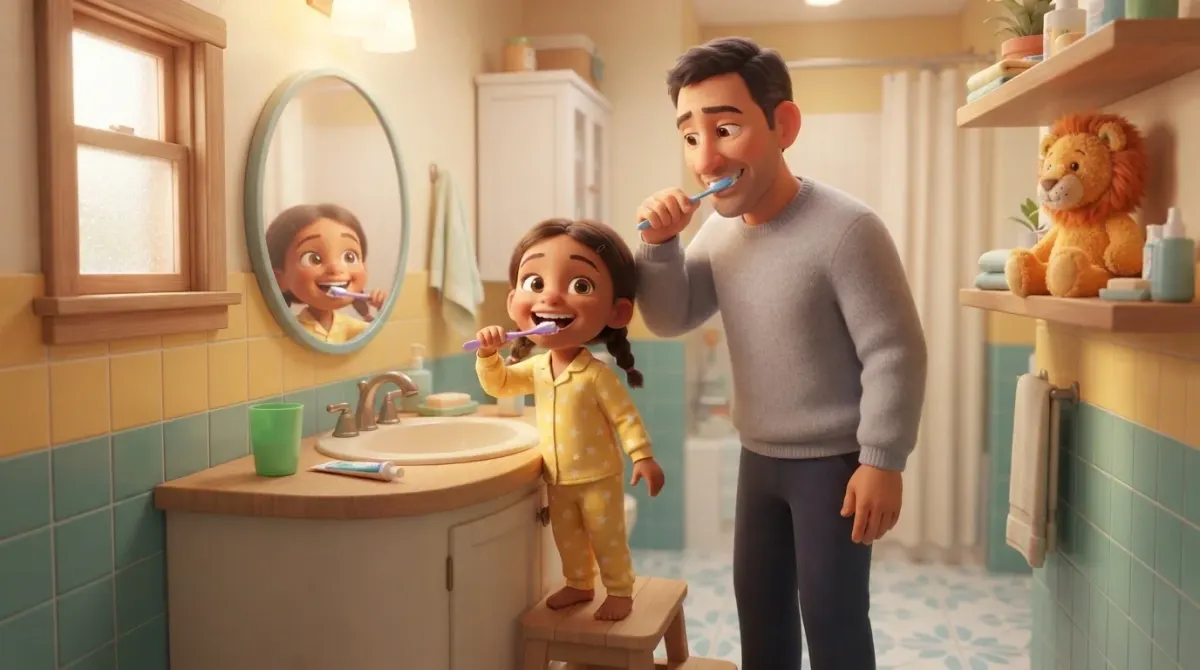
My name is Priya. I have a purple toothbrush and a green cup.
In the morning and before bed, it is time to brush my teeth.
Sometimes I am busy playing, and I do not want to stop. That is okay.
I can walk to the bathroom and climb onto my step stool.
I can pick my toothbrush. I can pick a song.
A grown-up puts toothpaste on my brush. Sometimes it tastes strong. Sometimes it tickles.
I open my mouth wide, like a lion. Roar!
I brush my top teeth. I brush my bottom teeth. I brush the ones hiding at the back.
Sometimes my grown-up takes a turn to help. I can hold my green cup while I wait.
If I need a break, I can say, "I need a break, please."
Then I spit in the sink and rinse my brush. Swish, swish.
Sometimes I forget, and I run away or close my mouth tight. That is okay. I can try again.
When I am done, my teeth feel smooth. I show my big smile in the mirror.
Then it is time for my story. Brushing is done.
Notice the story never says what will happen to Priya's teeth if she skips a night, and it never calls her naughty for running away. It gives her choices she can really make, a way to ask for a break, and a clear picture of what comes after.
Tips for reading it
Read it away from the sink, let your child choose what they can, and use the story's own words at brushing time.
- Choose a calm moment. The couch in the afternoon, or a slow weekend morning. Reading it in the bathroom in the middle of a standoff turns it into a lecture.
- Act it out with a toy. Let your child brush a stuffed animal's teeth while you read. Being the helper feels different from being helped.
- Offer real choices. Two toothbrushes, two songs, stool or counter. Small choices give a child some say in a routine they did not pick.
- Use the story's words at the sink. "Open wide, like a lion" is easier to follow than "stop messing around," because your child has heard it before.
- Brush alongside them. Children watch what grown-ups do. Brushing your own teeth at the same time makes it something the family does together.
- Bring in your child's team. If your child gags, finds the bristles painful or seems very upset by brushing, talk to their dentist or pediatrician. An occupational therapist is the person to ask about sensory needs.
Free printable tooth brushing stories and picture charts are easy to find on teacher and therapy resource sites, and they are a fine place to start. The gap is that the child and the bathroom in the pictures belong to someone else.
Making one starring your child with WonderCast
You type one sentence about the situation, and WonderCast writes and illustrates a short, calm story starring your child, by name and by look.
A prompt like "Priya is a space captain who brushes her teeth every morning and every night before her rocket can launch" is enough. Add your own details: the color of the toothbrush, the song you sing, the stuffed animal who watches from the shelf.
- Read together or listen. Read it as a storybook, or play it as an audiobook.
- No photo needed. A written description of your child is enough to make their character.
- A calm setting. Every story request goes through a safety check, and WonderCast is 100% ad-free.
WonderCast comes with 10 free books, so you can try a tooth brushing story and a few others before choosing a plan; see pricing. If clothes are the next sticking point after teeth, a social story for getting dressed covers that part of the routine.
If you are weighing personalized books, we compared Wonderbly and its alternatives and the best bedtime story apps for kids.
Frequently asked questions
What is a story about brushing teeth? It is a short, first-person story that describes the tooth brushing routine step by step. It names the parts that can feel strange, like the taste of toothpaste, and gives a child small choices and words to use, such as asking for a break.
How do I get my child to brush their teeth without a fight? There is no single answer, and a story is not a fix. What a story does is make the routine familiar: the same steps, in the same order, with your child as the main character. Small choices, a toy to practice on and brushing alongside your child are common-sense things to try. If brushing is very upsetting for your child, talk to their dentist or pediatrician.
How long should my child brush, and which toothpaste should they use? Those are questions for your child's dentist, who knows your child's teeth. This post is about the story and the routine around it, not about dental care. Once your dentist has told you what they recommend, you can add their words to your story.
Can I use this story with an autistic child? Yes. Short, first-person stories that describe a routine ahead of time are used by many teachers, speech therapists and occupational therapists. Every child is different, so ask your child's team how to adapt the words and the routine.
Start on a calm afternoon
Read the story this afternoon, let a stuffed animal have its teeth brushed tonight, and read it again tomorrow. When you want a version with your own child, their own toothbrush and their own bathroom, start on the social stories page.