A dentist social story is a short, calm, first-person story that walks a child through a dental visit before it happens: the waiting room, the big chair that moves, the bright light, counting teeth, the cleaning and going home. Read on an ordinary day, it gives your child a picture of each step before anyone asks them to open wide.
If your child clamps their mouth shut or will not sit in the chair, that is a very understandable reaction. A dental visit asks a child to lie back, keep still and let a stranger put things in their mouth, with sounds, tastes and lights they have not met before.
Why the dentist can feel hard
A dental visit is a lot of new sensations at once, most of them in or near the mouth.
There is the chair that tips back. There is a bright light overhead. There are new sounds, like the buzz of the polisher and the slurp of the little straw that takes away water. There may be a gritty toothpaste with an unfamiliar taste. For a child who is sensitive to sound, touch or taste, each of these is worth naming in advance.
A social story describes each of those things plainly, in order, so none of them arrives as a surprise. It can also include a signal for a break, like raising a hand, if you agree on one with the dental team before the visit.
Social stories were developed by Carol Gray in 1991 to describe situations plainly and calmly ahead of time. WonderCast is not affiliated with Carol Gray or The Gray Center; we use "social story" in the everyday sense parents and teachers do. Our guide to social stories for autism covers the format in more depth.
What to include
Each step in order, each sound and feeling described honestly, a break signal, and going home.
- The day and who is going. "On Thursday, Dad and I are going to see Dr. Lee."
- The waiting room. That there is waiting, and something to do while they wait.
- The chair. It is big, it moves up, and it tips back.
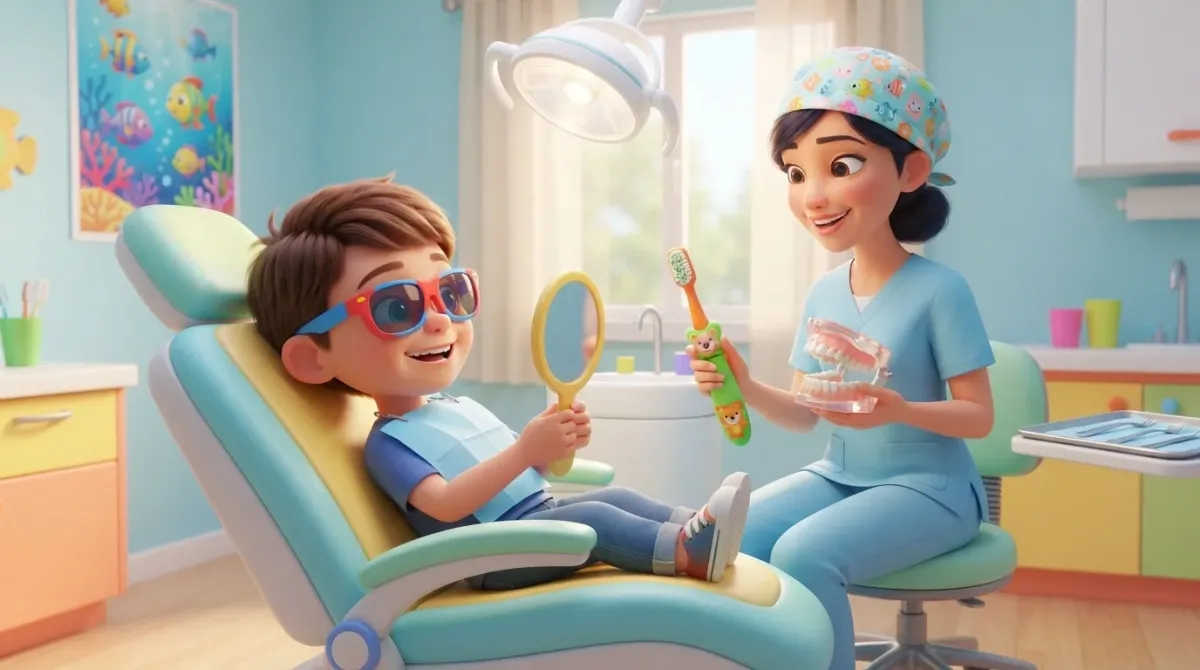
- The light. It is bright. Some dental offices give children sunglasses to wear; ask yours.
- Counting teeth. The dentist uses a little mirror to look at and count teeth.
- The cleaning. The tickly or buzzing toothbrush, the gritty toothpaste, the water and the slurpy straw.
- A break signal. Raising a hand to ask for a break. Agree on it with the dental team first, so the story is true.
- The dentist's job. "The dentist's job is to check that my teeth are healthy." One perspective line is enough.
- Going home. The visit ends, and something ordinary comes next.
Only include the steps that will really happen at this visit. If you are not sure whether there will be X-rays or a fluoride treatment, ask the office, and leave them out if not.
A ready-to-read dentist social story
Swap in your child's name, the dentist's name and your office's details. One line per page works well for a booklet.
Sam Goes to the Dentist
On Thursday, Dad and I are going to the dentist. My dentist's name is Dr. Lee.
Lots of children go to the dentist. Grown-ups go too.
First, we sit in the waiting room. I can look at a book while we wait.
Then someone calls my name, and we go into a room with a big chair.
I sit in the big chair. The chair moves up, and it tips back. It feels a little like a ride.
There is a bright light above the chair. I can wear sunglasses, so the light is not too bright.
Dr. Lee looks at my teeth with a little mirror. Dr. Lee counts my teeth.
I can open my mouth wide, like a lion.
Then my teeth get cleaned with a tickly toothbrush. The toothbrush might buzz. The toothpaste might feel gritty.
A little straw takes away the water in my mouth. It makes a slurpy sound.
Dr. Lee's job is to check that my teeth are healthy.
If I need a break, I can raise my hand. Dr. Lee will stop and wait.
When the visit is finished, the chair goes back up, and I sit up.
Dad and I say goodbye, and we go home. I went to the dentist.
Two lines in this story depend on your dental office: the sunglasses and the raised-hand break. Check both before the visit. If the office cannot agree to stop when your child raises a hand, change that line to something that is true, like "I can squeeze my toy."
Tips for using it
Read it in the days before, practice at home, and talk to the dental office.
- Start a few days ahead. Read it at calm times, and once more on the morning of the visit.
- Play dentist. Take turns being the dentist. Lie back on the couch, count each other's teeth with a finger, and practice "open wide, like a lion."
- Practice the break signal. Try it while brushing teeth at home: your child raises a hand, and you stop and wait.
- Call the office ahead. Ask what will happen at this visit, and whether they offer sunglasses, a quick tour or a short first visit just to sit in the chair. Tell them what your child finds hard.
- Show pictures. Many dental offices have photos of their rooms on their websites. Adding them to your story makes it look more like the real place.
- Bring comfort. A small toy or a familiar blanket can come along, if the office is happy for it to.
Free printables or a story starring your child
Free printable dentist social stories are easy to find on teacher and therapy resource sites, and some dental offices share their own. They are a good place to start. The gap is that the chair, the dentist and the child in the pictures are someone else's.
Making one starring your child with WonderCast
You type one sentence about the visit, and WonderCast writes and illustrates a short, calm story starring your child, by name and by look.
A prompt like "Sam goes to the dentist with Dad, wears sunglasses in the big chair, and Dr. Lee counts his teeth" is enough. Add what you know about your office: the dentist's name, the fish poster on the wall, the break signal you agreed on.
- Read together or listen. Read it as a storybook, or play it as an audiobook on the way to the appointment.
- No photo needed. A written description of your child is enough to make their character.
- A calm setting. Every story request goes through a safety check, and WonderCast is 100% ad-free.
WonderCast comes with 10 free books, so you can make a dentist story and a few others before choosing a plan; see pricing. For other appointments, see a social story for going to the doctor, or use our social story template to write your own. More ideas are on the social stories page.
Frequently asked questions
What is a dentist social story? It is a short, first-person story that describes a dental visit step by step, from the waiting room to going home. It covers the chair, the light, counting teeth and the cleaning, so your child knows what will happen and in what order.
How do I prepare my child for their first dentist visit? Read a dentist social story for a few days before the visit, practice "open wide" and counting teeth at home, and call the office to ask what will happen. Some offices offer a short first visit to meet the team and sit in the chair, so it is worth asking.
What if my child will not open their mouth at the dentist? Lots of children find this hard, especially at a first visit. Practice at home in a playful way, agree on a break signal with the dental team, and tell them what your child finds hard before the visit starts. Your dental team may have ideas of their own.
Should my child wear sunglasses at the dentist? Some children find the overhead light very bright, and some dental offices give children sunglasses for that reason. Ask your office, or bring a pair from home.
When should I read the dentist story? Start a few days before the appointment and read it at calm times. Read it once more on the morning of the visit. Try not to read it for the first time in the dentist's chair.
Before the next appointment
You do not need anything special to start. Fill in the story above with your dentist's name and your office's details, and read it tonight. When you want a version with your own child in the big chair, start on the social stories page.