A bedtime story for staying in bed is a short, calm, first-person story that describes what happens after lights out, names the feeling of wanting one more thing, and gives a child a few things to do while staying under the covers. It is read at the start of the bedtime routine, or earlier in the day, so the words are familiar before the door closes.
If your child pops back out for a drink of water, another hug, a question about tomorrow and then a second drink of water, you are in very ordinary company. Wanting to be near you at the end of the day is a normal feeling. It does not mean your child is being naughty, and it does not mean your bedtime is broken.
What this story is for
A staying-in-bed story turns "go back to bed" into a picture a child can hold: what bedtime looks like, where their grown-ups are, and what to do when they feel like getting up.
From a child's side, bedtime is a big change. The house is still awake. The fun of the day is ending, and they are being asked to lie still in a dim room on their own. A trip out for a drink of water can be less about thirst and more about checking that you are still there.
The story below starts from that feeling. It describes the routine in order, says plainly that staying in bed can be hard, and tells the child where their grown-up is and when they will see them again. Then it offers a few quiet things to do in bed.
This is not a sleep training method, and it does not promise that your child will stay in bed. It is a story that describes the moment and gives your child words and steps. How you respond when they get up is your family's decision. If you have concerns about your child's sleep, such as night waking, snoring or nightmares that keep coming back, talk to your pediatrician.
For some children, the reason for getting up is the dark itself. If that sounds like your house, a story about fear of the dark pairs well with this one.
What to include
Describe the routine, name the feeling, say where the grown-ups are, give quiet things to do, and end with morning.
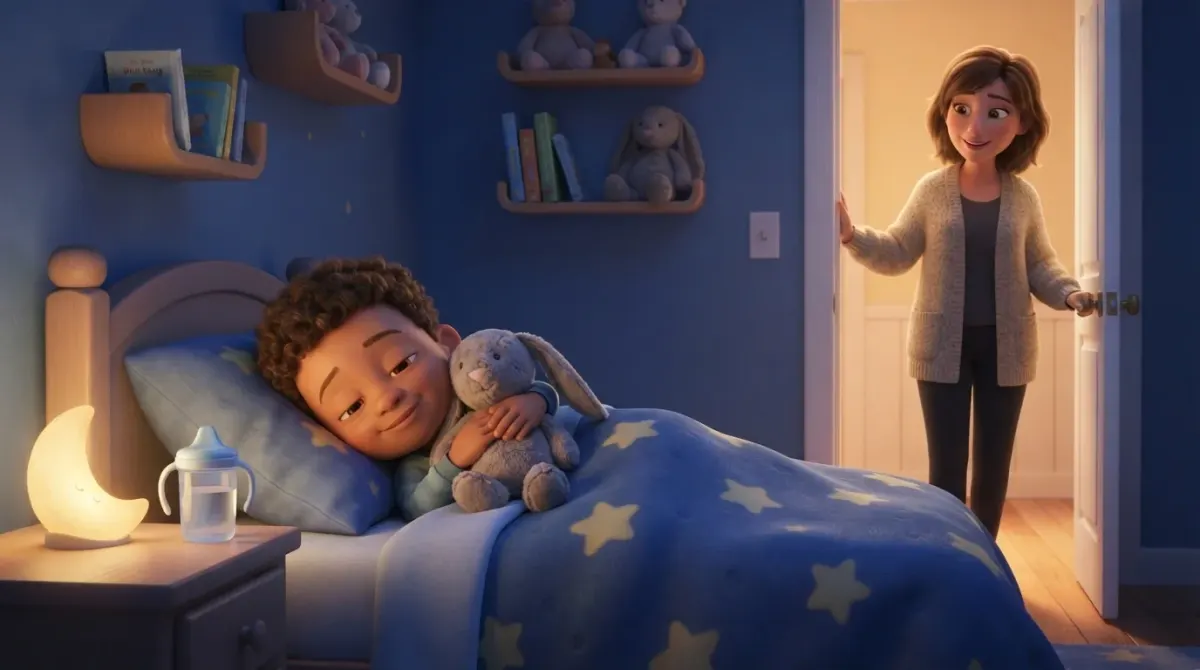
- Your child's name and their real room. The star blanket, the stuffed rabbit, the night-light shaped like a moon.
- The routine in order. Bath, pajamas, teeth, story, hug, lights out. Use your family's real steps.
- The last things before lights out. A drink of water, a trip to the bathroom, one big hug. Putting them in the story makes them part of the routine.
- The feeling, without blame. "Sometimes I want one more thing. That is okay."
- Where the grown-ups are. In the kitchen, on the couch, in the next room. It is easier to stay put when you can picture where everyone is.
- Quiet things to do in bed. Hug a stuffed animal, take slow breaths, think about the best part of the day.
- When it is okay to call out. If they feel sick, feel scared or need the bathroom. Say so in the story, so staying in bed never means staying silent when something is wrong.
- What morning looks like. The sun comes up, and a grown-up is glad to see them.
A ready-to-read bedtime story for staying in bed
Swap in your child's name, their room and their own routine. One line per page works well if you are making a booklet.
Felix Stays Cozy in Bed
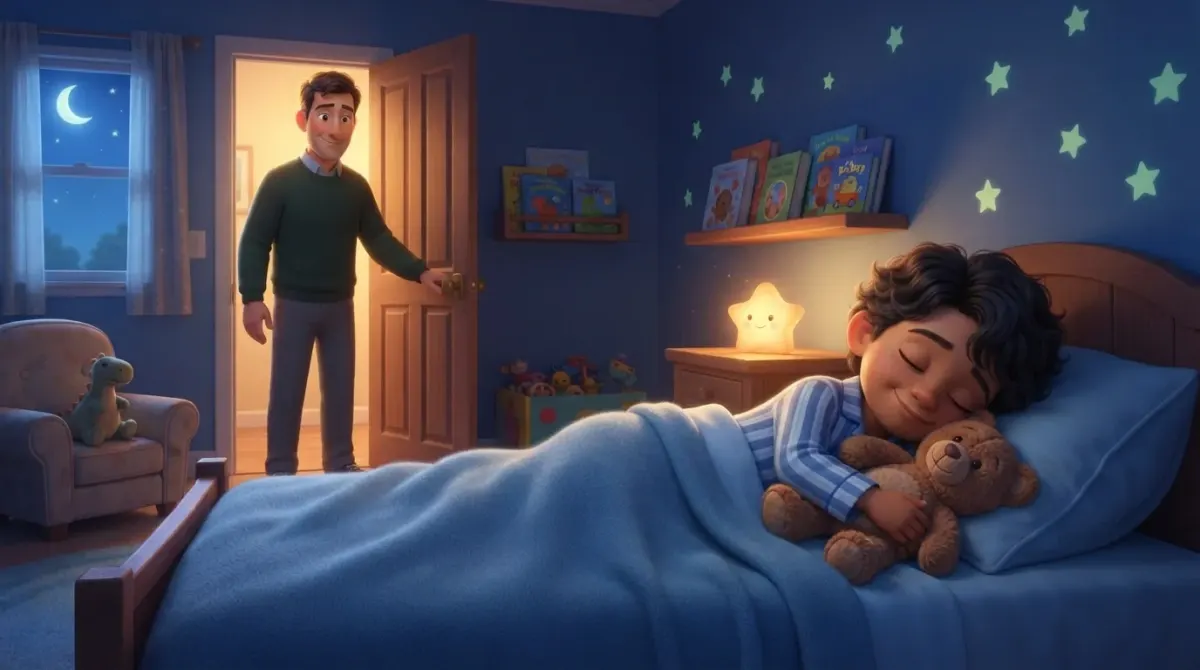
My name is Felix. I sleep in my bed with my star blanket and my rabbit, Clover.
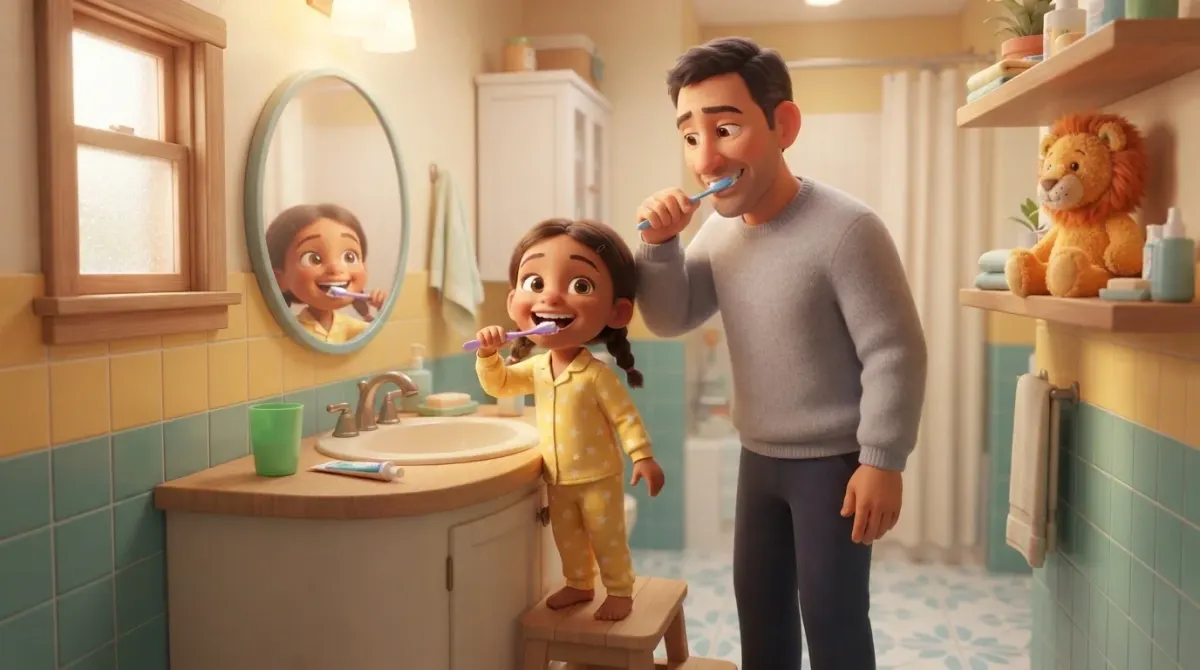
At bedtime, I put on my pajamas, brush my teeth and read a story.
Before the light goes off, I have a drink of water. I use the bathroom. I get one big hug.
Then my grown-up says, "Good night, Felix. I love you." The light goes off.
Sometimes I want one more drink, or one more hug, or one more story. Wanting is okay.
My grown-ups are close by. They are in the kitchen or on the couch. They can hear me if I need them.
My job at night is to stay cozy in my bed.
I can hug Clover. I can pull my blanket up to my chin.
I can take three slow breaths. In, and out.
I can think about the best part of my day.
If I feel sick, or scared, or I need the bathroom, I can call my grown-up. That is always okay.
Sometimes I forget, and I get out of bed. That is okay. I can walk back, climb in and try again.
My body rests. My bed is warm.
In the morning, the sun comes up. I see my grown-up, and we say, "Good morning!"
Notice the story puts the drink of water inside the routine, before the light goes off. It never calls getting up naughty. It tells Felix where his grown-ups are, gives him things to do with his body, and makes it clear he can always call out if something is wrong.
Tips for reading it
Read it early, do the "one more" things first, and use the story's own words after lights out.
- Read it before the hard part. Earlier in the evening, or as the first book of bedtime. Reading it after the third trip down the hall turns it into a lecture.
- Do the "one more" things first. Offer the drink, the bathroom trip and the hug before lights out, and name them out loud: "Here is your drink of water."
- Say where you will be. "I will be in the kitchen" gives your child a picture of you to hold on to.
- Use the story's words in the moment. A quiet "Your job is to stay cozy in your bed" is easier to hear than a long explanation, because your child has heard it before.
- Stay calm when they get up. A quiet voice and the same few words each time are easier on a tired evening than a new argument. How you respond beyond that is your family's choice.
- Bring in your child's team. If bedtime brings big fear or distress, or you are worried about your child's sleep, talk to your pediatrician.
Free printable bedtime charts and stories are easy to find on teacher and therapy resource sites, and they are a fine place to start. The gap is that the bedroom and the child in the pictures belong to someone else.
Making one starring your child with WonderCast
You type one sentence about the situation, and WonderCast writes and illustrates a short, calm story starring your child, by name and by look.
A prompt like "Felix and his rabbit Clover stay cozy in bed after lights out while the house gets quiet" is enough. Add your own details: the blanket, the night-light, the person who says good night.
- Read together or listen. Read it as a storybook, or play it as an audiobook.
- No photo needed. A written description of your child is enough to make their character.
- A calm setting. Every story request goes through a safety check, and WonderCast is 100% ad-free.
WonderCast comes with 10 free books, so you can try a staying-in-bed story and a few others before choosing a plan; see pricing. If you want more to read once the routine story is done, our post on short bedtime stories for preschoolers is a good next stop.
If you are weighing personalized books, we compared Wonderbly and its alternatives and the best bedtime story apps for kids.
Frequently asked questions
What is a bedtime story for staying in bed? It is a short, first-person story that describes the bedtime routine and what happens after lights out. It names the feeling of wanting one more drink or one more hug, tells a child where their grown-ups are, and gives them quiet things to do in bed.
Why does my child keep getting out of bed? There are many possible reasons, and you know your child best. Some children want one more moment with you, some are not sleepy yet, and some are worried about the dark or about tomorrow. A story will not tell you which it is, but reading one together can start the conversation. If you are concerned, your pediatrician is the right person to ask.
Should I let my child have one more drink of water? That is up to you. One simple approach is to put the drink inside the routine, before lights out, so it has already happened. The story above does that. If your family prefers a cup of water by the bed, change the line to match.
Can I use this story with an autistic child? Yes. Short, first-person stories that describe a routine ahead of time are used by many teachers, speech therapists and occupational therapists. Every child is different, so ask your child's team how to adapt the words and the routine.
Start tonight, before lights out
Read the story at the start of bedtime tonight, offer the drink of water and the hug before the light goes off, and read it again tomorrow. When you want a version with your own child, their own room and their own stuffed animal, start on the social stories page.