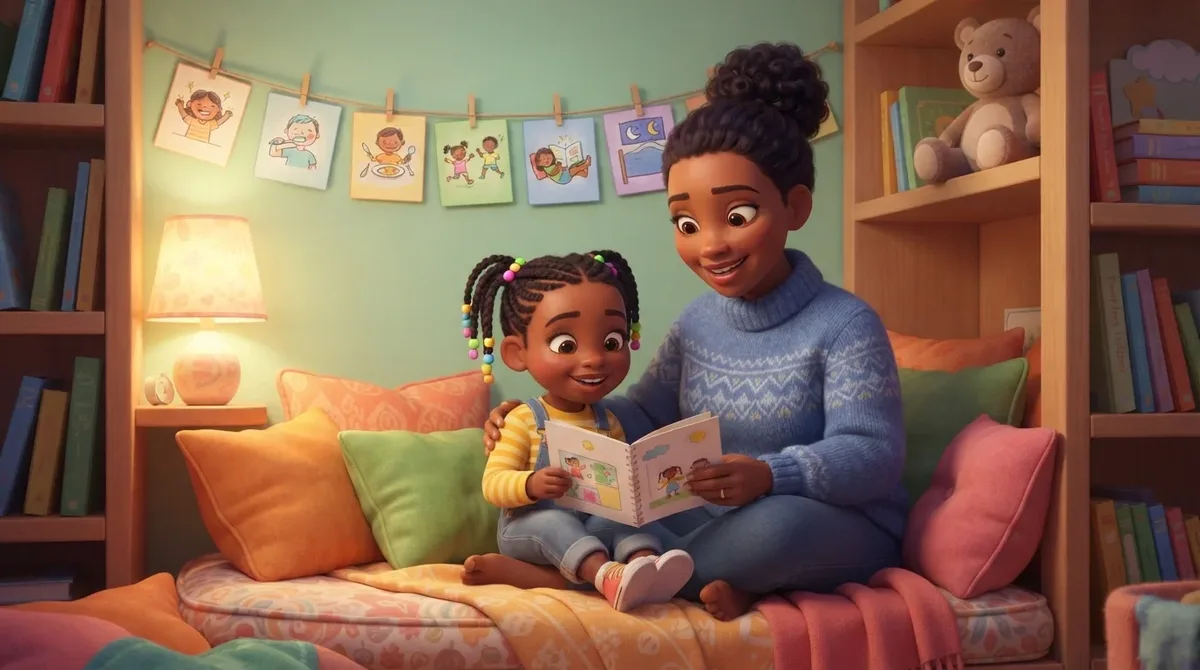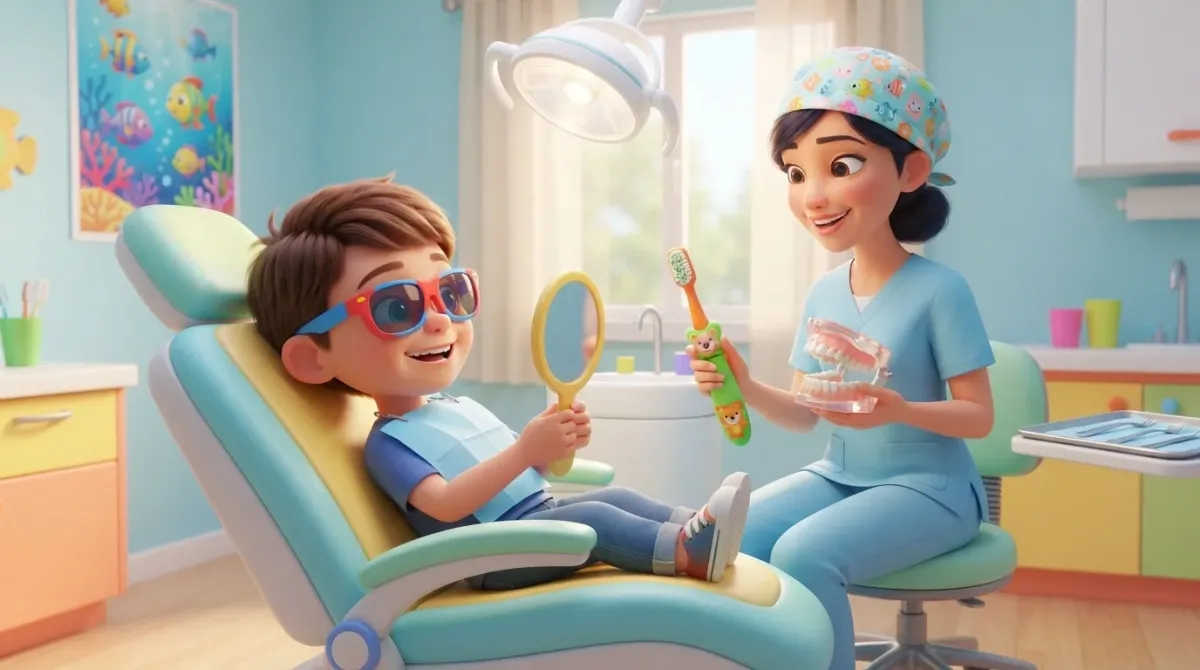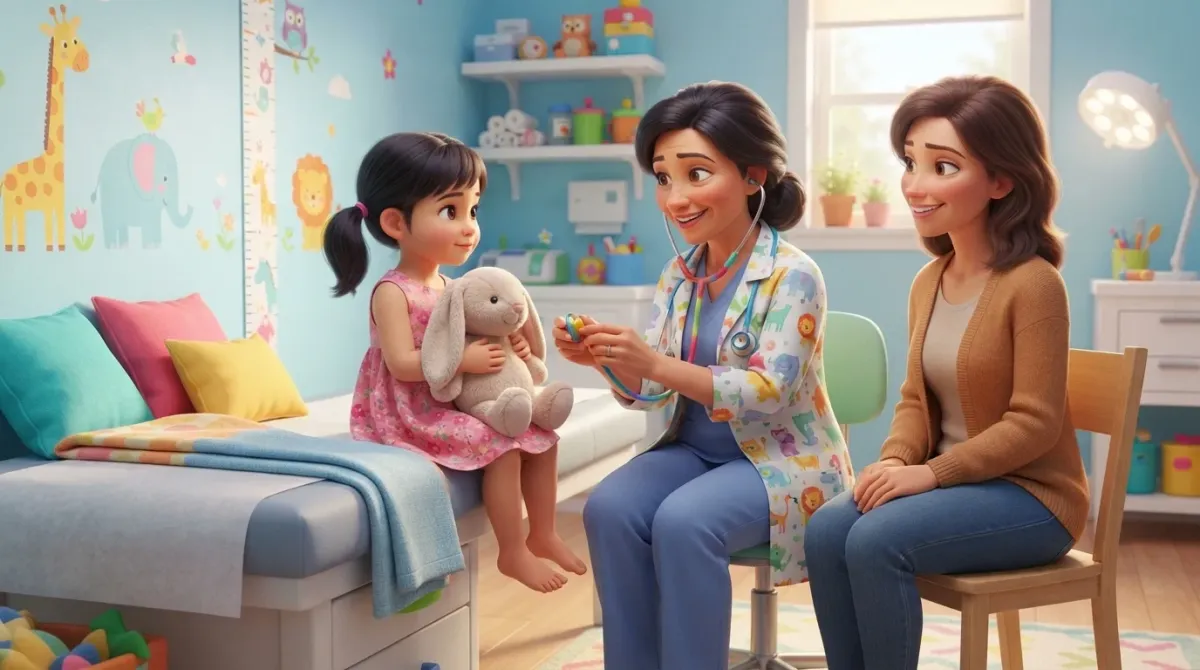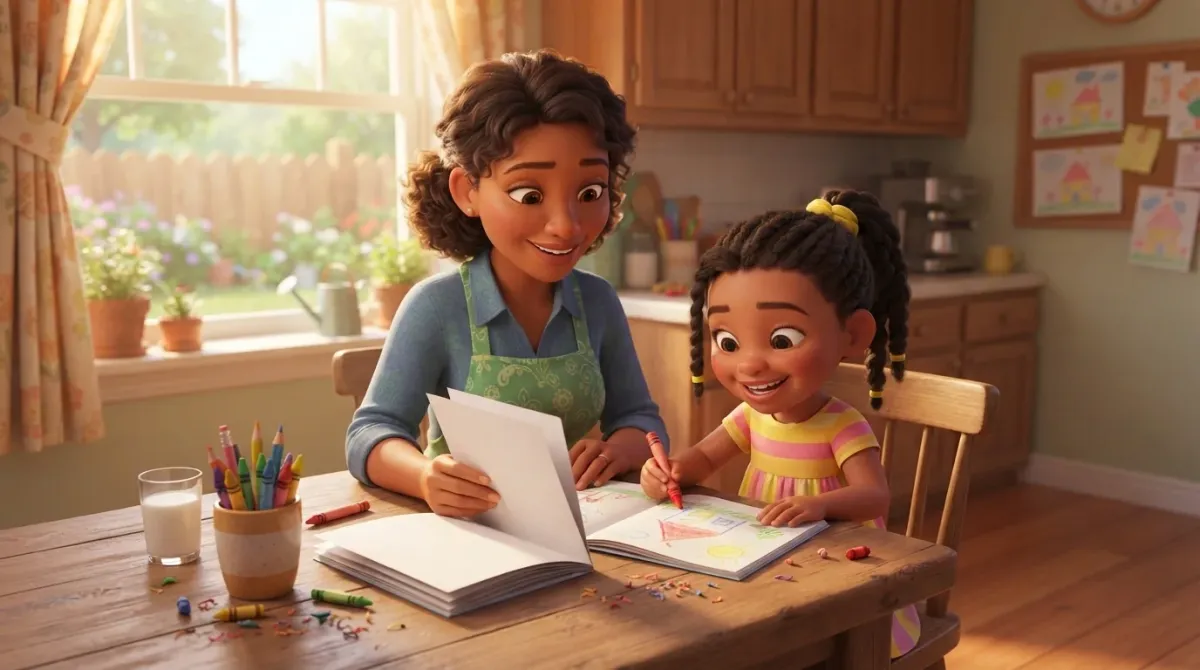
A social story template is a fill-in-the-blanks outline for a short, calm, first-person story that describes a situation before it happens: where it is, who will be there, what happens first and last, and what the child can try if it feels hard. You copy it, swap in your child's name and the real details, and read it together at a quiet moment.
You might be a parent with a dentist visit on the calendar, or a teacher or speech therapist writing one for a student. Either way, you do not need special training. Below are three templates for the three kinds of situations that come up most, plus sentence starters, a finished example and a checklist to run before you read it.
What a social story template is for
A template gives you the shape, so you can spend your time on the details that make the story your child's.
Social stories were developed by Carol Gray in 1991 as short, descriptive stories that share information about a situation plainly and positively. WonderCast is not affiliated with Carol Gray or The Gray Center; we use "social story" in the everyday sense parents and teachers do. Social stories are now widely used by parents, teachers, speech therapists and occupational therapists.
Most social stories follow the same order. They name the situation, describe the place and the people, walk through what happens, mention what might feel hard, offer one or two calm things to try, and end with the situation over. A template saves you from starting with a blank page each time. The details are still yours to fill in: the dentist's name, the color of the bus, the song the class sings at circle time.
If you are new to social stories, our guide to social stories for autism explains the format in more depth, with three complete examples.
The parts of a social story
A title, the setting, what happens in order, how it might feel, what others think, what I can try, and a calm ending.
- A title with your child's name. "Ava Goes to the Dentist." Seeing their own name tells a child the story is about them.
- The setting. Where it happens and who will be there.
- What happens, in order. First, next, last. One short sentence per step.
- How it might feel. Loud, new, bright, long, exciting. Say it plainly, and say that the feeling is okay.
- What other people think or feel. One or two lines, like "The teacher wants everyone to have fun."
- What I can try. One or two calm strategies your child already knows, written as "I can" or "I might."
- A calm ending. The situation is over, and the day carries on.
Sentence starters for each kind of sentence
Write mostly describing sentences, a few perspective sentences, and only one or two that suggest what to do.
Many guides group social story sentences into a few types. You do not need to label them as you write. Knowing them just helps you keep the balance right.
- Describing sentences say what happens. "At [place], there is…" "First, … Then, …" "Sometimes…" "Usually…" "Lots of children…"
- Perspective sentences say what other people might think or feel. "[Person] wants to…" "[Person] might feel…" "My friends like it when…"
- Coaching sentences suggest what the child might do. "I can try…" "I might…" "If I feel [feeling], I can…" "I can ask [person] for…"
- Reassuring sentences state something calm and true. "That is okay." "Lots of people do this." "[Person] will be there with me."
A quick check: count the lines. If more than a couple of them tell your child what to do, the story has drifted from information into instructions. Turn some of them back into description.
Template 1: going somewhere new
For a visit, an appointment or an event: the doctor, the dentist, a haircut, a birthday party, a plane trip.
[Name] Goes to [Place]
On [day], I am going to [place].
[Person] will go with me.
At [place], there is [one thing I will see] and [another thing].
[Person who works there] will be there. Their job is to [what they do].
First, [what happens first].
Then, [what happens next].
It might feel [loud / new / bright / long]. That is okay.
If I feel [worried / tired / too busy inside], I can [hold my toy / take slow breaths / cover my ears / ask for a break].
[Person] wants me to [feel safe / have fun / be comfortable].
When it is finished, we [go home / have a snack / go to the park].
I went to [place]. [A calm, true ending.]
For filled-in versions of this shape, see a social story for going to the doctor and a social story for going to the dentist.
Template 2: a change in routine
For something different from usual: a substitute teacher, a new bus, a holiday schedule, a move, a new baby.
[Name] and [the change]
Usually, [what normally happens].
On [day], something will be different.
[What will be different, in one sentence.]
Some things will stay the same. [One or two things that stay the same.]
Changes can feel strange at first. That is okay. Lots of people feel that way.
[Person] knows about the change. They will be there to help me.
If I feel unsure, I can [ask a question / look at my picture schedule / hold my comfort toy].
After a while, [the new thing] might start to feel familiar.
[A calm ending: what happens at the end of the day.]
The line about what stays the same matters. A change is easier to picture when the child knows which parts of the day are not changing. For a big family change, a story about a new sibling for toddlers follows this shape.
Template 3: a skill to practice
For an everyday social moment: sharing, waiting, keeping hands to self, personal space, raising a hand to talk.
[Name] and [the skill]
[Something I already do well that is related to the skill.]
Sometimes [the moment when the skill is needed].
When that happens, I might feel [feeling]. That is okay. Feelings are okay.
When [what happens], [other person] might feel [feeling].
Most of the time, people [what usually happens].
I can try [one calm thing].
I can try [another calm thing].
I can ask [grown-up] for help.
Sometimes I forget. That is okay. I can try again.
[A calm ending: the child and others playing, learning or together.]
Start a skill story with something your child is already good at. It tells them the story is not about something being wrong with them. For worked examples, see a social story for keeping hands to self and a social story about sharing and taking turns.
A filled-in example: going to a birthday party
Here is Template 1, filled in. Most lines describe, and only two suggest what to do.
Noah Goes to Maya's Birthday Party
On Saturday, I am going to Maya's birthday party.
Dad will go with me.
The party is at Maya's house. There will be balloons and lots of children.
Maya's mom will be there. Her job is to help everyone play.
First, we play games in the backyard.
Then, everyone sings "Happy Birthday" to Maya. The singing might be loud.
When everyone sings, I can cover my ears if I want to.
Then, we eat cake.
Parties can feel busy and noisy. That is okay.
If I feel too busy inside, I can tell Dad. We can take a break in a quiet spot.
Maya wants her friends to have fun at her party.
When the party is finished, I say goodbye, and Dad and I go home.
I went to Maya's birthday party.
Notice what the story leaves out. There is no "I must stay at the table" and no reward for being good. It describes the party, names the loud part, and gives Noah two calm options.
Turning the template into a booklet
One sentence per page, a picture on each page, and a copy wherever the situation happens.
- One line per page. Fold a few sheets of paper in half and staple the middle. Short pages are easier to follow, and turning the page marks each step.
- Add pictures. Use photos of the real place, simple drawings, or pictures your child draws. Many dental offices, schools and libraries have photos on their websites.
- Read it before, not during. Read it at calm times in the days before the situation. Reading it in the middle of a hard moment turns it into an instruction.
- Repeat it. Daily for a week or so is a common starting point. Familiar words are part of the point.
- Share it. Give a copy to the teacher, grandparent or babysitter so everyone uses the same words.
- Fix what was wrong. If the real situation was different from the story, change the story before next time.
A checklist before you read it
Read the story out loud once, by yourself, and check:
- Is it in first person ("I") and mostly present tense?
- Is it mostly description, with only one or two "I can" lines?
- Does it use "sometimes," "usually" or "might" for anything that could change? A story that promises the dentist is always quick makes the slow day feel like a broken promise.
- Does it leave out "bad," "naughty," "must" and "should," and any rewards or consequences?
- Does it end calmly, with the situation over?
- Would your child recognize the place and the people?
If any line sounds like a lecture, rewrite it as a plain description.
Templates, printables and personalized stories
A template, paper and a pen cost nothing, and they are all you need to get started. Free printable social stories are another option, and teacher and therapy resource sites offer them for most common topics.
The limit of a printable is that the child in the pictures is not yours, and neither is the place. If you would rather not fill in blanks at all, or you want your own child on every page, a social story maker can do the writing and illustrating for you.
Making one starring your child with WonderCast
You type one sentence about the situation, and WonderCast writes and illustrates a short, calm story starring your child, by name and by look.
Use a filled-in template as your notes. A prompt like "Noah goes to Maya's birthday party with Dad: games in the backyard, loud singing, cake, and a quiet break if he needs one" is enough. Add the real names and places, and they will appear in the story.
- Read together or listen. Read it as a storybook, or play it as an audiobook.
- No photo needed. A written description of your child is enough to make their character.
- A calm setting. Every story request goes through a safety check, and WonderCast is 100% ad-free.
WonderCast comes with 10 free books, so you can make stories for the next few situations on your calendar before choosing a plan. The plans are on the pricing page, and the social stories page has more ideas.
Frequently asked questions
What is a social story template? It is a fill-in-the-blanks outline for a short, first-person story that describes a situation before it happens. You add your child's name, the place, the people and what happens in order, then read it together at a calm time.
What should a social story include? A title with your child's name, where it happens and who will be there, what happens in order, how it might feel, what other people think or feel, one or two calm things your child can try, and a calm ending with the situation over.
How many sentences should a social story have? For young children, eight to fifteen short sentences is a common length. Older children may like more detail. If your child loses interest before the end, cut lines.
Can I use one template for any situation? Most situations fit one of three shapes: going somewhere new, a change in routine, or a social skill to practice. Pick the template closest to your situation and change anything that does not fit. Leave out any line that is not true for your child.
Is there a free social story maker? A template and a pen are free, and they are all you need. If you want a story written and illustrated with your own child in it, WonderCast comes with 10 free books, so you can try it on a real situation before choosing a plan.
Pick one situation this week
You do not need a binder full of stories. Pick one thing on this week's calendar, copy the closest template above, fill in the brackets and read it tonight at a calm moment. When you want a version with your own child on every page, start on the social stories page.