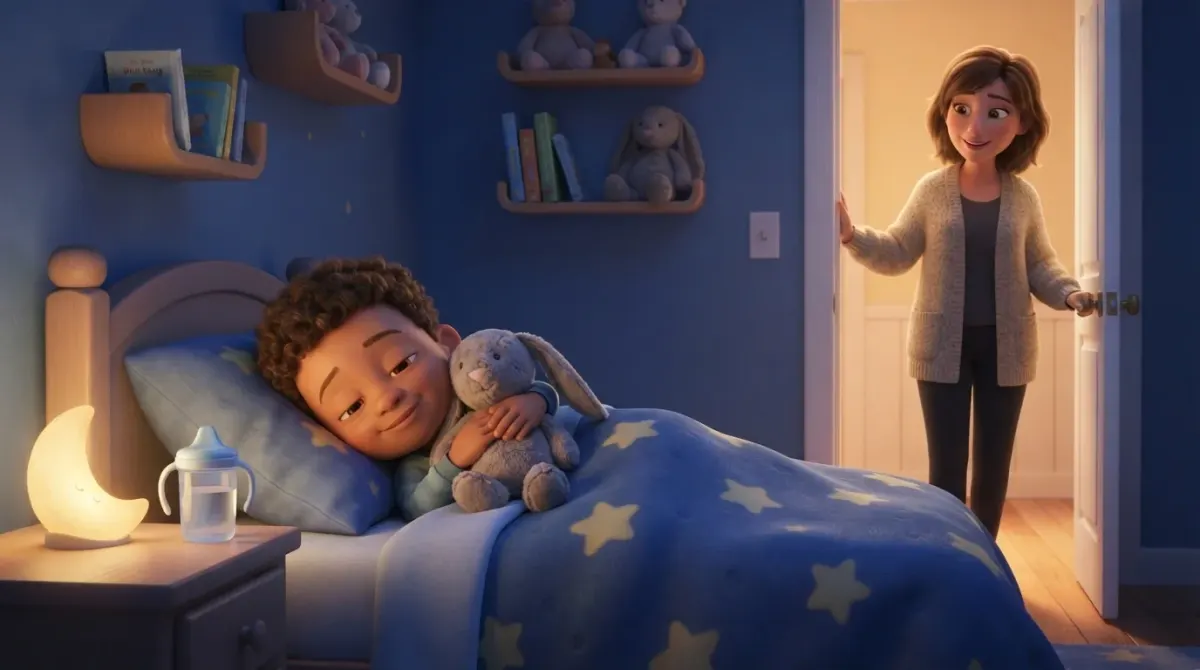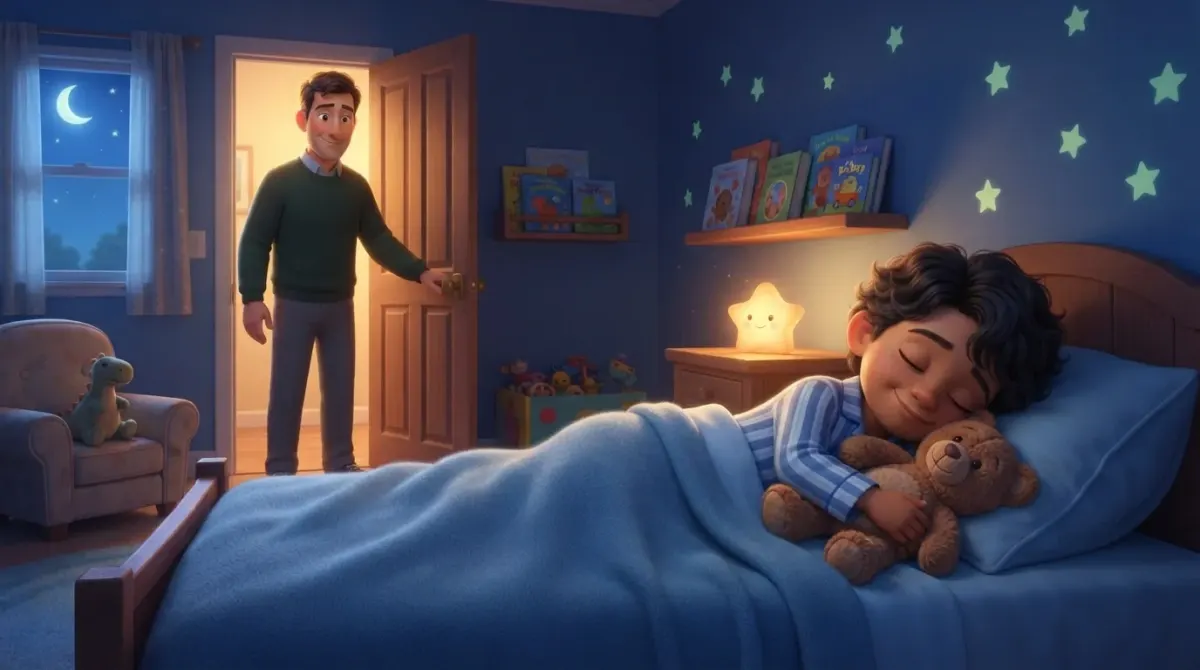
A story about being afraid of the dark is a short, calm, first-person bedtime story that describes what lights-out feels like, treats the fear as real, and gives a child a few comforts to reach for: a night light, a stuffed animal, and knowing where the grown-ups are. It is read before the light goes off, so the comforts are fresh in your child's mind when the room gets dim.
If bedtime in your house comes with "one more hug," a request for the big light, or small feet in the hallway, you are in very ordinary company. Many young children feel uneasy in the dark. It does not mean your child is being difficult, and it does not mean bedtime has gone wrong.
What this story is for
A story about the dark takes the fear seriously, and shows a child what they can still see, hold and count on once the light is off.
Telling a child there is nothing to be afraid of rarely lands, because the feeling is there all the same. To a small child, it can sound like nobody believes them. This story starts from the other side. The dark can feel scary. The feeling is real. Here is what is still true when the light goes off: the room is the same room, the night light is on, the stuffed animal is right there, and the grown-ups are close by.
The story does not describe anything frightening. There are no monsters in it, not even friendly ones, because a child who was not thinking about monsters does not need the idea at bedtime. It also makes no promise about how your child will feel tomorrow night. It describes the moment, names the feeling, and gives your child words and a few comforts.
Some children leave their bed when the dark feels too big. If that is the pattern in your house, a bedtime story for staying in bed covers that part of the night.
What to include
Describe lights-out, name the fear as real, show that the room is the same room, list the comforts, and say where the grown-ups are.
- Your child's name and their real room. The blue blanket, the shelf of books, the window with the tree outside.
- The moment the light goes off. Say what changes: the room looks different, and shapes are harder to see.
- The feeling, taken seriously. "Sometimes the dark feels scary to me. Lots of kids feel that way."
- The room is the same room. The chair is still the chair. The books and toys are in the same places.
- The night light. Say where it is and what your child can see by it.
- Something to hold. A stuffed animal or a blanket, by name.
- Where the grown-ups are. "My dad is in the living room."
- The sounds of the house. Quiet voices, the dishwasher, footsteps. Ordinary sounds that mean people are near.
- What to do if the fear gets big. Your family's own rule, in one line: take a slow breath, squeeze the stuffed animal, or call out.
- A line for hard nights. "Sometimes I forget. That is okay. I can try again."
- A gentle ending. Morning comes, and the room is bright again.
A ready-to-read bedtime story about the dark
Swap in your child's name, their room, their stuffed animal and the grown-up who does bedtime. One line per page works well if you are making a booklet.
Diego and the Night Light
My name is Diego. At bedtime, I brush my teeth and read a book with my dad.
Then it is time to turn off the big light.
When the big light goes off, my room looks different.
Sometimes the dark feels scary to me. Lots of kids feel that way.
My room is still my room. My bed, my books and my chair are in the same places.
My night light stays on. It makes a small, soft glow by my bed.
I can see my blanket. I can see my door.
My bear, Biscuit, is next to me. I can hug Biscuit tight.
My dad is in the living room. I can hear the quiet sounds of my house.
If I feel scared, I can take a slow breath and squeeze Biscuit.
If I still feel scared, I can call, "Dad," and he will come and check on me.
Sometimes I forget, and I run out of my room. That is okay. I can try again.
My bed is warm and soft. My eyes can rest.
In the morning, the sun comes up, and my room is bright again.
Notice the story never says there is nothing to be afraid of. It says the dark can feel scary, and then it points to things Diego can see, hold and hear. He also knows where his dad is and what to do if the feeling gets big.
Tips for reading it
Read it before lights-out, set up the comforts together in daylight, and keep your check-ins calm and short.
- Read it with the light on. Make it part of the bedtime routine, before the big light goes off.
- Choose the night light together. Let your child pick where it goes, and try it out in the daytime with the curtains closed. A dim, warm light is usually enough to see the bed and the door.
- Take a tour of the room. With the big light off and the night light on, walk around together and name what you see: the chair, the coat on the hook, the toy box.
- Say where you will be. "I will be in the kitchen, and then in the living room." Then be there. If your story says you will come when called, come.
- Believe the feeling. "I know, the dark can feel scary" is enough. You can believe the feeling without agreeing that anything is in the room.
- Keep check-ins calm and short. If your child calls, a quiet visit, a tuck-in and one line from the story is plenty.
A story is something to share at bedtime. It is not sleep advice. If you have questions about your child's sleep, your pediatrician is the right person to ask.
Making one starring your child with WonderCast
You type one sentence about the situation, and WonderCast writes and illustrates a short, calm story starring your child, by name and by look.
A prompt like "Diego feels scared when the big light goes off, so he hugs his bear Biscuit and looks at his night light" is enough. Add your own details: the color of the night light, the stuffed animal's name, the room where the grown-ups sit in the evening.
- Read together or listen. Read it as a storybook, or play it as an audiobook.
- No photo needed. A written description of your child is enough to make their character.
- A calm setting. Every story request goes through a safety check, and WonderCast is 100% ad-free.
WonderCast comes with 10 free books, so you can try a story about the dark and a few others before choosing a plan; see pricing. For more gentle reading before lights-out, see our short bedtime stories for preschoolers.
If you are weighing personalized books, we compared Wonderbly and its alternatives and the best bedtime story apps for kids.
Frequently asked questions
What is a story about being afraid of the dark? It is a short, first-person bedtime story that describes what happens when the light goes off. It says the dark can feel scary, shows that the room is still the same room, and names a few comforts: a night light, a stuffed animal, and where the grown-ups are.
Should I tell my child there is nothing to be afraid of? It is a natural thing to say, and it comes from a kind place. Many children hear it as "your feeling is wrong," though. This story takes a different path. It says the dark can feel scary, and then it points to what is still the same in the room and who is nearby.
Is it okay to use a night light? Many families do. A dim, warm light lets a child see the bed, the door and their stuffed animal. If you have questions about light and your child's sleep, ask your pediatrician.
What should I say if my child talks about monsters? You can take the feeling seriously without adding to the picture. Something like "That sounds scary. I am close by, and your room is the same room it was at storytime" names the feeling and goes back to what is true. The script above leaves monsters out for the same reason.
When should I talk to the pediatrician? If your child's night fears are intense, go on for many weeks, or get in the way of sleep or daytime life for your child or your family, talk to your pediatrician. They know your child and can tell you what to expect.
Start at tonight's bedtime
Read the story tonight with the light on, choose a spot for the night light together, and tell your child where you will be. When you want a version with your own child, their own room and their own stuffed animal, start on the social stories page.