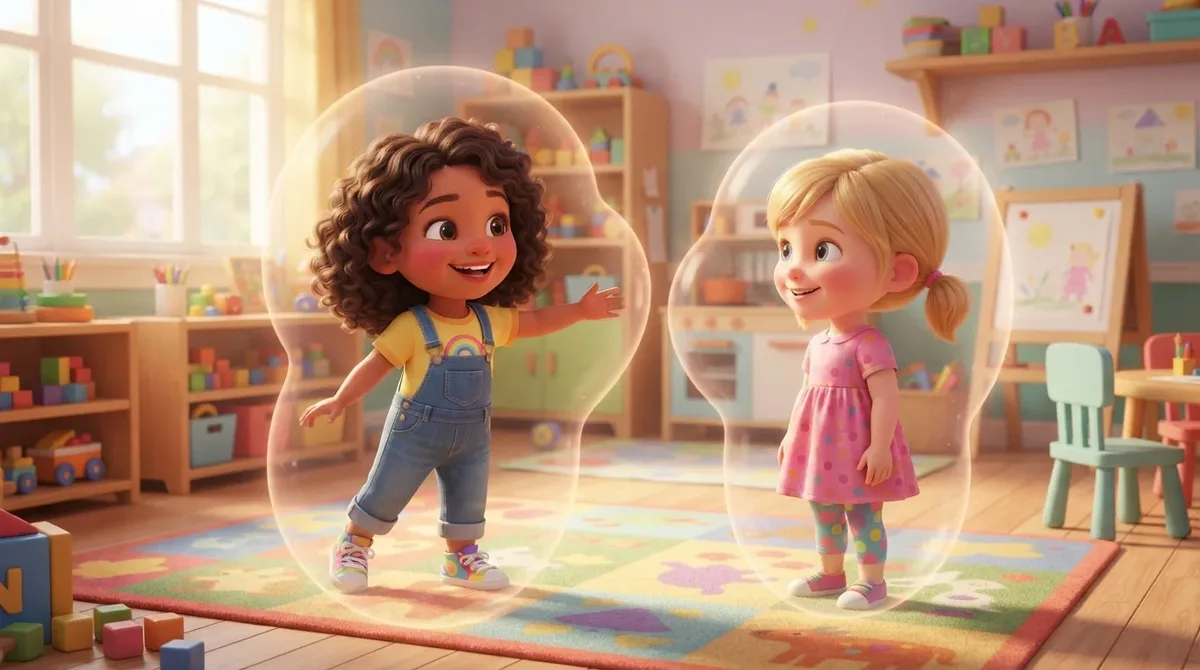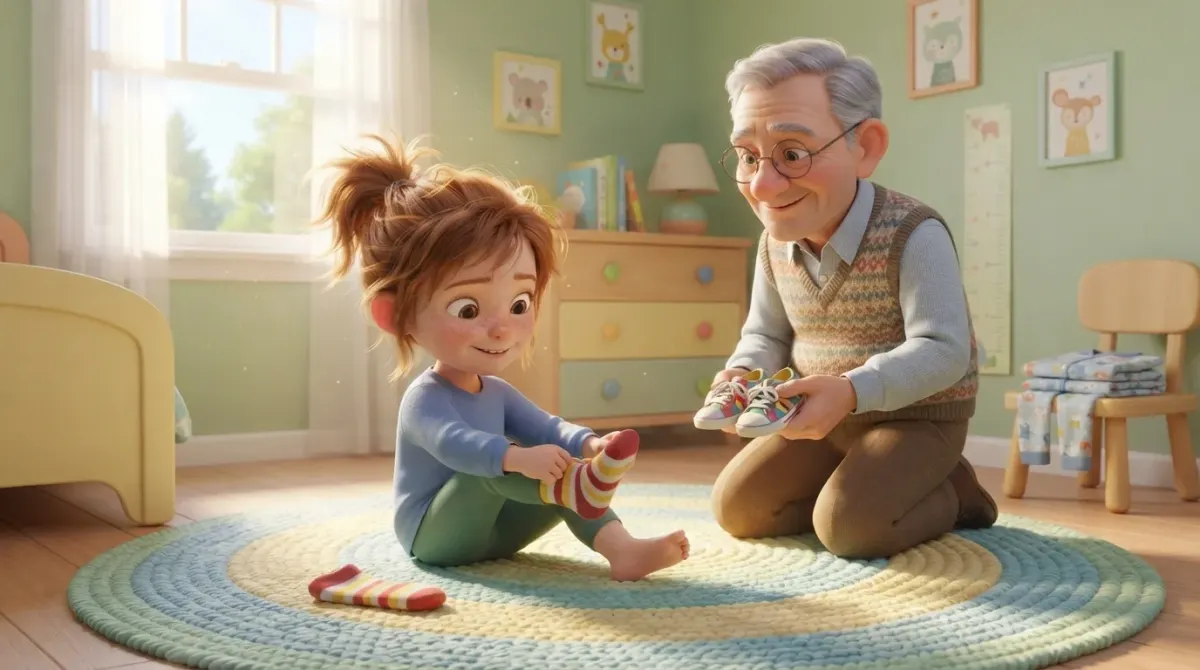
A transition social story is a short, calm, first-person story about the moment when something fun ends and something else begins: leaving the park, turning off the TV, getting out of the pool, coming in from recess. It describes what usually happens (a warning, a little more time, then the end), says that feeling sad or cross about it is okay, and shows what comes next.
If "time to go" is the hardest two minutes of your day, your child is not being difficult on purpose. Stopping something you love is hard at any age. For a child who finds change hard, the end of a fun activity can feel sudden even when you gave a warning.
Why transitions are hard
A transition asks a child to stop something they chose and start something they did not choose, often all at once.
Some children find the stopping hardest. Others find the not-knowing hardest: what happens now, and will the fun thing come back? For a child who relies on knowing what comes next, an ending without a clear warning can feel very sudden.
A social story cannot make leaving the park fun. It can make the shape of the ending familiar: first a warning, then a little more time, then goodbye, then the next thing. When the pattern is the same every time, the ending is less of a surprise.
Social stories were developed by Carol Gray in 1991 to describe situations plainly and calmly ahead of time. WonderCast is not affiliated with Carol Gray or The Gray Center; we use "social story" in the everyday sense parents and teachers do. For more on the format, see our guide to social stories for autism.
What to include
The activity, the warning, the feeling, a short goodbye, and what comes next.
- The activity your child loves. Name it: the swings, swimming, the tablet, the train table at the library.
- The warning. How your family signals that the end is coming: "five more minutes," "two more slides," a timer, a song.
- The end, said plainly. "When the timer rings, swimming is finished."
- The feeling. "I might feel sad or cross. That is okay." Naming it tells your child the feeling is allowed.
- A goodbye. Waving to the slide, saying "bye, pool," putting the toy back on the shelf. A small ritual marks the ending.
- What comes next. The car, a snack, bath, dinner. Something concrete to move toward.
- That it comes back. "We can come to the park another day." Only say it if it is true.
- A calm ending. The child in the next place, settled.
The "first, then" idea fits here: first swimming, then snack. Some children use a picture schedule that shows the order of the day. If your child already uses one, mention it in the story.
A ready-to-read transition social story
Swap in your child's name, the activity and your family's real warning words. One line per page works well for a booklet.
Mia Says Goodbye to the Park
I like going to the park. I like the swings and the slide.
Playing at the park is fun. Sometimes I want to stay all day.
The park is one part of my day. After the park, there are other things to do.
Before it is time to go, Mom tells me. She says, "Five more minutes."
Five more minutes means I can keep playing for a little while.
Then Mom says, "Two more slides." I go down the slide two more times.
Then it is time to go. The park is finished for today.
I might feel sad or cross when the fun stops. That is okay. Lots of people feel that way.
I can take a big breath. I can wave goodbye to the slide.
I can say, "Bye, park. See you another day."
Next, we walk to the car. At home, I have my snack.
We can come back to the park another day.
I said goodbye to the park. Now it is snack time.
The same story for swimming, screens or recess
Change three or four lines and the story fits other endings:
- Swimming: "Before it is time to get out, my teacher says, 'Last swim to the wall.'" "Then swimming is finished for today." "I can say, 'Bye, pool.'" "Next, I dry off with my towel and get dressed."
- Screen time: "Before the show ends, Dad says, 'This is the last one.'" "When the show ends, the TV goes off." "I can say, 'Bye, TV.'" "Next, we build with blocks."
- Recess: "Before recess ends, my teacher holds up two fingers for two more minutes." "When the bell rings, recess is finished." "I line up with my class." "Next, we have reading time."
Tips for using it
Read it on calm days, give the same warnings every time, and keep the goodbye short.
- Read it before the outing. At breakfast, or in the car on the way to the park. Not while your child is holding on to the swing.
- Use the same warnings every time. If the story says "five more minutes, then two more slides," say exactly that at the park. The words in the story and the words in real life should match.
- Try a visual timer. A timer your child can see shows how much time is left. Some children prefer counting down the last few slides or laps instead.
- Show what comes next. Name the next thing, or show a picture of it. "First park, then snack" gives your child something to move toward.
- Keep the goodbye short. A wave, a "see you another day," and off you go. The story's goodbye is short on purpose.
- Be honest about coming back. Only promise another park day if it will happen. A broken promise makes the next story harder to trust.
- Share it with school. School days are full of transitions: recess, lunch, the end of choice time. If your child has a teacher, speech therapist or occupational therapist, share the story so everyone uses the same words.
Free printables or a story starring your child
Free printable transition stories and visual schedules are easy to find on teacher and therapy resource sites, and they are a sensible place to start. The gap is that the park, the pool and the child in the pictures are not yours. Writing in your own details closes some of that gap, and a personalized story puts your child in the pictures too.
Making one starring your child with WonderCast
You type one sentence about the situation, and WonderCast writes and illustrates a short, calm story starring your child, by name and by look.
A prompt like "Mia hears 'five more minutes' at the park, goes down the slide two more times, waves goodbye and goes home for her snack" is enough. Use your family's real warning words and the real next thing.
- Read together or listen. Read it as a storybook, or play it as an audiobook in the car on the way to the park.
- No photo needed. A written description of your child is enough to make their character.
- A calm setting. Every story request goes through a safety check, and WonderCast is 100% ad-free.
WonderCast comes with 10 free books, so you can make a park story, a bath story and a bedtime story before choosing a plan; see pricing. The social stories page has more ideas, and a social story for a fire drill covers a sudden, noisy transition at school.
Frequently asked questions
What is a transition social story? It is a short, first-person story that describes the moment one activity ends and another begins. It covers the warning, the ending, the feelings that come with it, a short goodbye and what comes next, so the pattern is familiar before it happens.
How do I tell my child an activity has finished? Use the same short words every time, and give a warning first. For example: "Five more minutes," then "Two more slides," then "The park is finished for today. Next is snack." Say what comes next, not only what is ending.
What is "first, then" language? It is a simple way of showing order: "First swimming, then snack." It tells a child what is happening now and what comes next. Some children use first-then cards or a picture schedule. Your child's teacher or therapist may already use one you can borrow at home.
Should I give a five-minute warning? A warning before the end is common at home and at school. Some children prefer a countdown they can see or count, like a timer, "two more slides" or "three more laps." Try a few, keep the one that suits your child, and use it every time.
Can I use this story for screen time? Yes. Swap the park for the show or game, the slides for "this is the last one," and the snack for whatever comes next. Keep the warning, the feeling, the goodbye and the next thing.
Start before the next "time to go"
Pick the ending that is hardest in your house, fill in the story above with your family's real words, and read it on a calm morning. When you want a version where your own child is the one waving goodbye to the slide, start on the social stories page.