A fire drill social story is a short, calm, first-person story that walks a child through the whole drill in advance: the loud alarm, covering ears, lining up, walking outside, waiting, and going back in. Reading it on an ordinary day means the real drill is something your child has already practiced in their head, at a time when nothing was loud and nothing was rushed.
If your child has cried, frozen, or bolted during a drill, that is an understandable reaction to a lot of noise and change at once. It is not misbehavior.
Why fire drills are so hard for some children
A drill combines three things many children find difficult: a sudden loud sound, an unexpected break in routine, and a crowd moving quickly.
For a child who is sensitive to sound, the alarm can be painful, not just startling. For a child who relies on knowing what comes next, the problem is that nobody explained the plan before it started. For a child who finds crowds hard, the hallway is the hardest part.
A social story cannot make the alarm quieter. What it can do is take away the surprise about everything else. When a child already knows the order (alarm, line, walk, wait, go back in), the drill has a beginning, a middle and an end they can picture.
Social stories were developed by Carol Gray in 1991 to describe a situation plainly and calmly before it happens. If you are new to them, our guide to social stories for autism covers how they work and how to write your own.
What to include in a fire drill social story
Describe each step in order, in short present-tense sentences, and end with the class back inside and the day carrying on.
- The alarm, described honestly. It is loud. It might flash. Say so plainly, so the story matches what your child will hear.
- What the alarm means. It is a practice. It tells everyone it is time to go outside.
- A plan for the sound. Covering ears with hands, or wearing ear defenders if your child uses them.
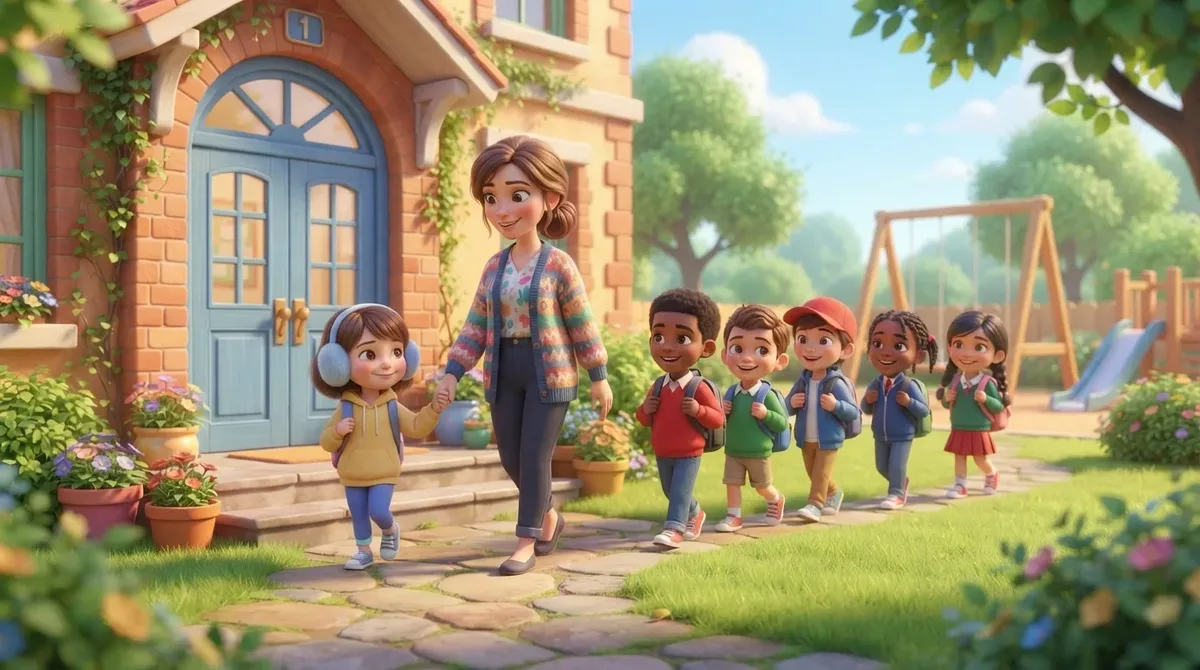
- Lining up. Who they line up with, and who leads the line.
- The walk. Walking, not running, with the class, through the door, outside.
- The waiting spot. Where the class stands, and that the teacher counts everyone.
- Going back in. The alarm stops, the class walks back, and the day goes on.
Use the real details if you know them. The name of the teacher, the color of the door, the place on the playground or field where the class waits. The closer the story is to the real thing, the more useful the rehearsal.
Leave out anything about danger, real fires, or what happens if your child does not follow the line. The story is about the routine, not the reason for it.
A fire drill social story you can read tonight
Swap in your child's name and your school's details, then read it at a calm time of day.
[Name] and the Fire Drill
At school, we sometimes have a fire drill.
A fire drill is a practice. It helps everyone know what to do.
When the drill starts, the fire alarm rings. It is very loud. Sometimes the lights flash too.
The loud sound can surprise me. That is okay.
I can cover my ears with my hands. Or I can wear my ear defenders.
My teacher, [Teacher's name], says, "Time to line up."
I stand in line with my class. I can stand near [friend or helper].
We walk, one behind the other. We do not need to run.
We go through the [color] door and outside.
Outside, we walk to our waiting spot by the [place].
We stand together and wait. My teacher counts everyone.
Waiting can feel long. I can take slow breaths. I can look at the sky or count the trees.
Then the alarm stops. It is quiet again.
My teacher says, "Time to go back inside."
We walk back to our classroom together.
I sit down, and the day keeps going.
The fire drill is finished. I did the practice with my class.
Short is fine. If your child loses interest, cut lines until it fits.
How to use the story so it actually helps
Read it well before the drill, at a calm time, and read it often.
- Read it before, not during. A social story is preparation. Pulling it out while the alarm is ringing turns it into an instruction at the worst possible moment.
- Repeat it. Several times across a week or two is more useful than once. Familiarity is the point.
- Ask the teacher about drill dates. Many schools plan drills in advance. If you ask, some teachers will tell you when one is coming, so you can read the story that morning or the night before. Some will also warn the class shortly beforehand.
- Talk about ear defenders. Some children use noise-cancelling ear defenders for loud sounds. If your child does, mention them in the story and check with the teacher about keeping them somewhere easy to reach, like a backpack hook or a cubby.
- Involve school staff. The teacher, an occupational therapist or a speech therapist may already have ideas, or a visual schedule for drills, and can help the story match how the drill really runs.
The same story shape works for a fire alarm at the library, or a smoke alarm going off at home while someone cooks.
Free printables or a story starring your child
Free printable fire drill social stories are easy to find and work well, and so does a hand-written story with your child's own drawings. The main gap with a printable is that it shows somebody else's school and somebody else's child. Writing in your real details often makes a difference. A personalized story is one more way to close that gap.
Making one starring your child with WonderCast
You type one sentence describing the situation, and WonderCast writes and illustrates a short, calm story with your child in it, by name and by look. For a fire drill, a prompt like "Mia hears the fire alarm at school, covers her ears, and walks outside with her class" is enough. Add the details you know: the color of the door, where the class waits, the ear defenders.
A few practical points:
- You can read it together, play it as an audiobook, or on the Creator and Studio plans hear it in a grown-up's own recorded voice, which takes about 30 seconds of recording. Only a grown-up can record a voice; recording a child's voice is switched off.
- No photo is needed. A written description is enough to create your child's character. If you do add a photo, it is deleted once the character is made and is never used to train AI.
- A Safety Agent screens every prompt, and stories resolve through kindness, with no scary or shaming moment. That matters for a story about an alarm. More detail is on the safety page.
- Every word lights up as it is read, which helps if your child likes to follow along. If a page is not quite right, you can regenerate that scene.
You can see more examples on the social stories page, or read six stories free with no account at /stories. The free plan makes and keeps 10 storybooks and 10 audiobooks. Paid plans are listed on the pricing page. WonderCast works on iPhone, iPad, Apple TV and the web; there is no Android app.
Frequently asked questions
What is a fire drill social story? It is a short, first-person story that describes a fire drill step by step, from the alarm to going back inside. It helps a child know what will happen and in what order, so the real drill is less of a surprise.
How do I help my child who is scared of the fire alarm? Prepare in advance. Read a fire alarm social story on calm days, plan how your child will manage the sound (hands over ears or ear defenders), and ask the teacher whether they can let you know when a drill is planned. Afterward, talk about it calmly if your child wants to.
Should my child wear ear defenders during fire drills? Some children use noise-cancelling ear defenders for loud sounds, and some schools are happy for them to be kept close by for drills. Talk to your child's teacher about where they can be stored so they are easy to grab. Your child may still be able to hear the teacher's directions with them on, but check this with the teacher too.
When should I read the fire drill story? Start a week or two before you expect a drill, and read it at calm times like breakfast or bedtime. If you know the date of a drill, read it again that morning. Avoid reading it for the first time during or right after a drill.
Can I use the same story for a fire alarm at home? Yes, with small changes. Swap the classroom for your home, the teacher for a grown-up at home, and the waiting spot for the place your family meets outside. Keep the same order and the same calm ending.
Before the next drill
You do not need anything special to start. Copy the story above, fill in your school's details, and read it tonight with nothing riding on it. If you want a version with your own child on every page, you can make one on the social stories page and have it ready before the next drill.