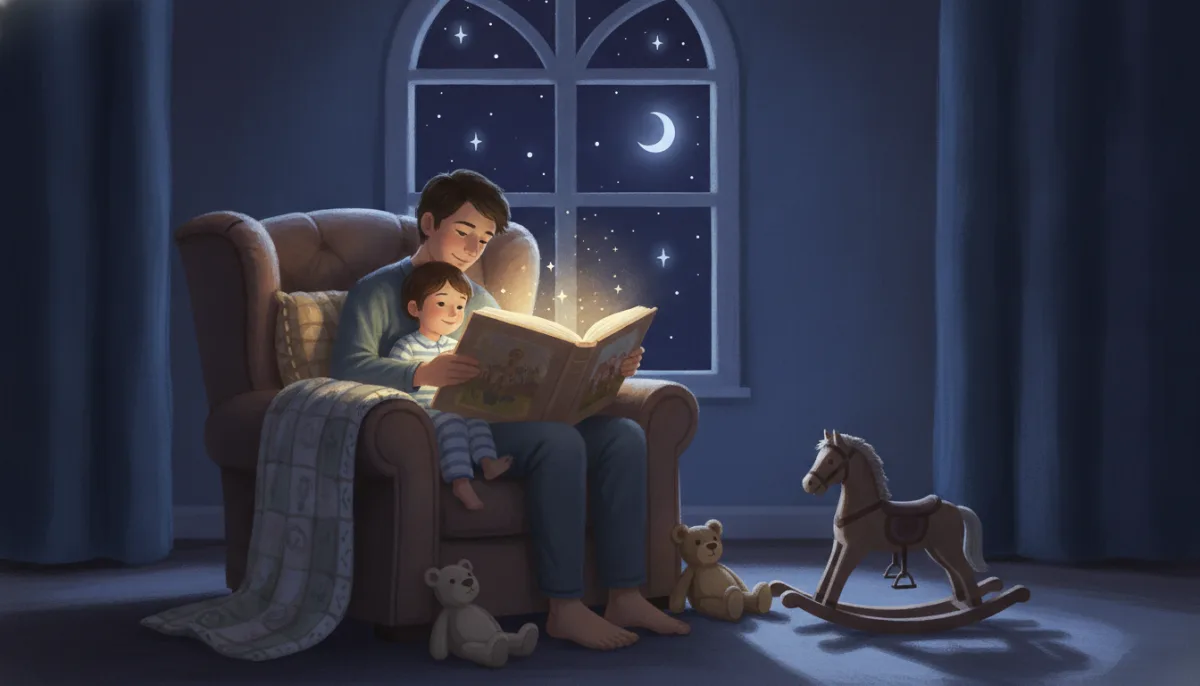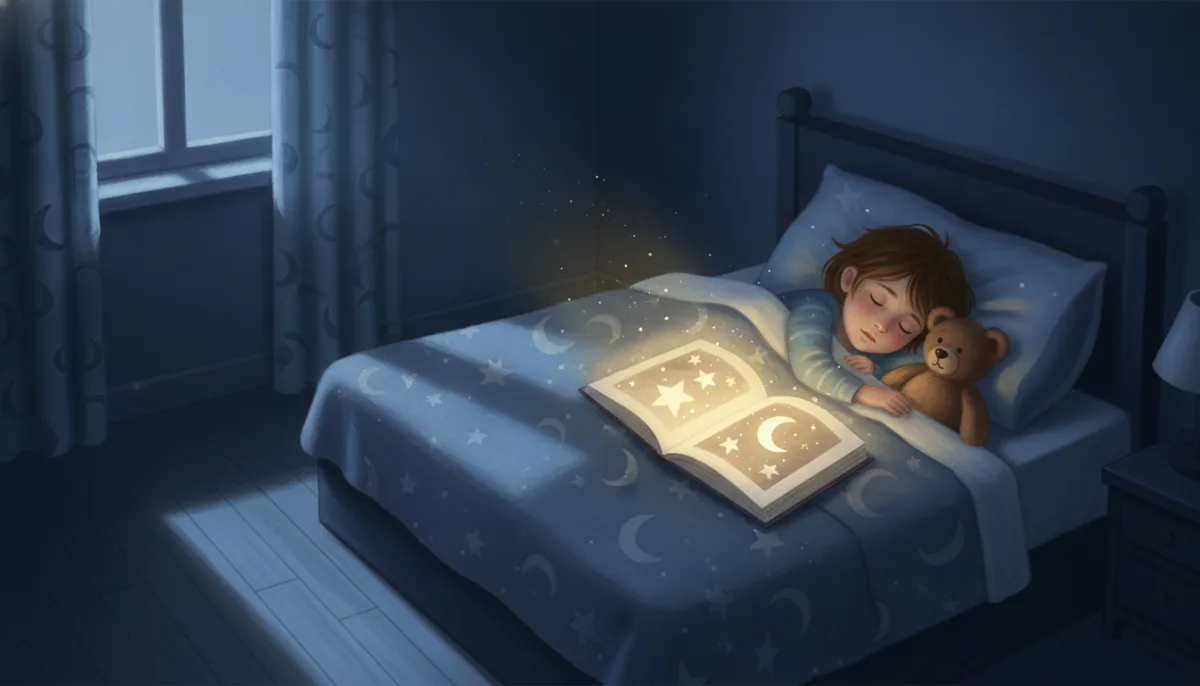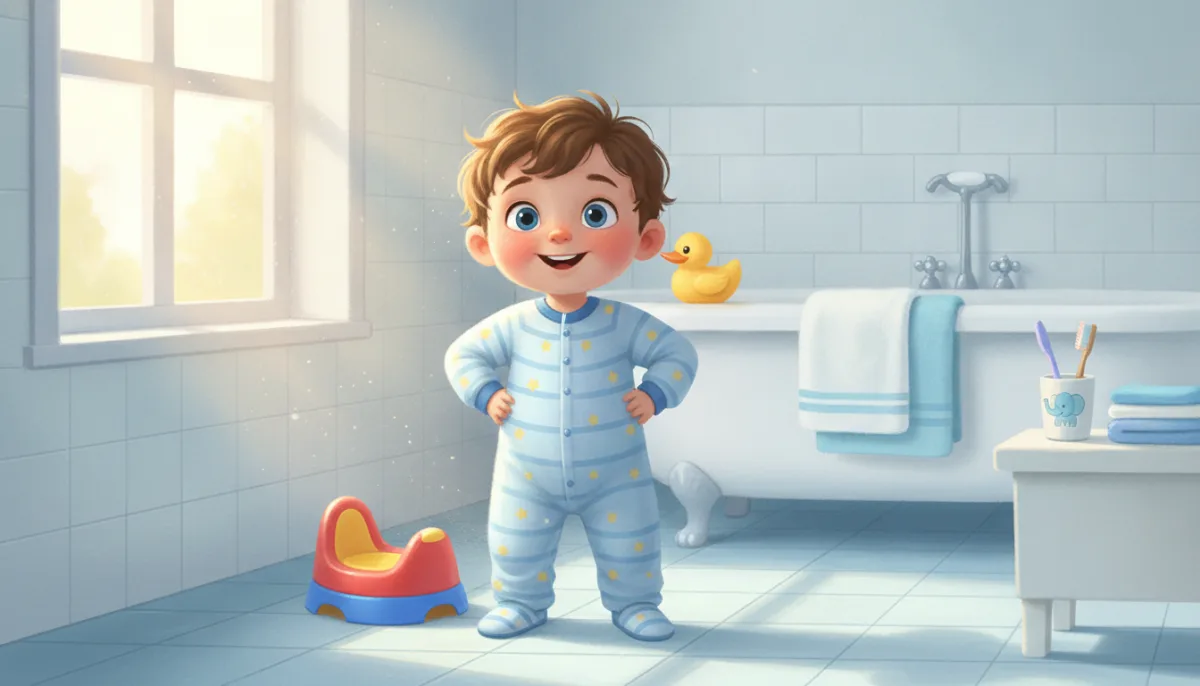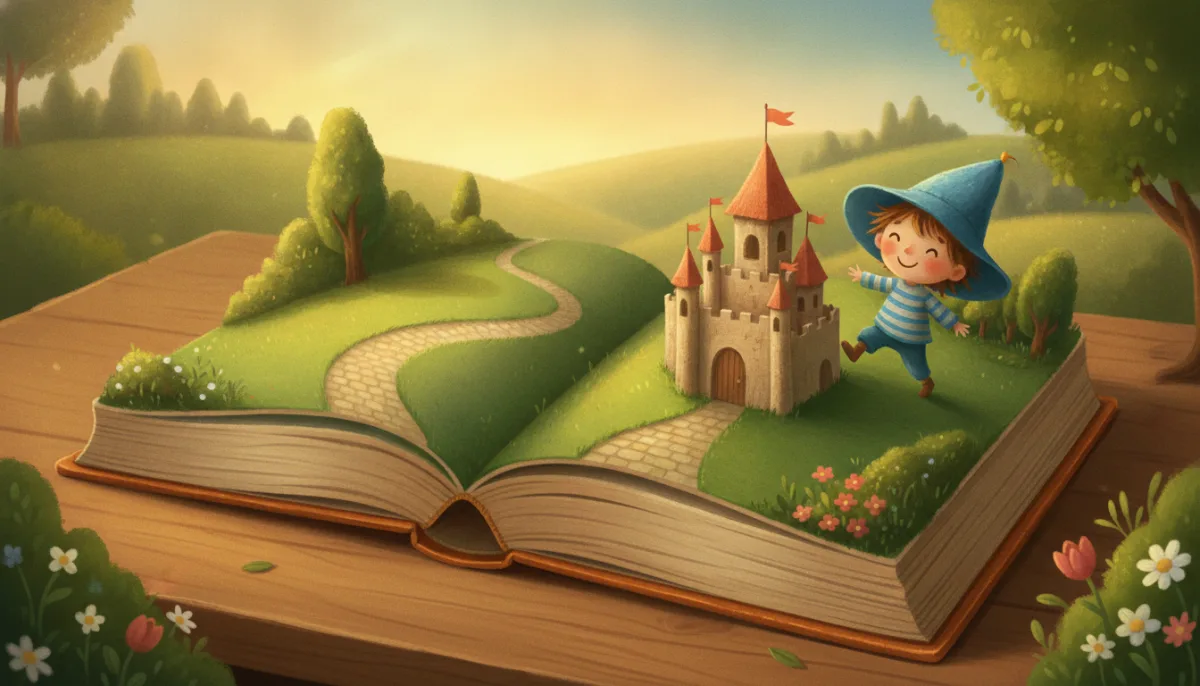
A personalized children's book in 2026 means a story built around one specific child, where that child's name, appearance, and world carry through the whole book rather than being dropped into a fixed template. The older print-on-demand version personalized the text. The newer AI version personalizes the character, so the hero on page twelve still looks like the hero on page one. This guide covers how both approaches work, what they cost, the safety questions worth asking, and how to make one tonight.
If you have ever handed your four-year-old a "custom" book and watched her squint at the cover and say "that's not me," you already understand the difference. The name was hers. The kid in the picture was somebody else's.
Name-swap template books vs. character-consistent AI books
The distinction that matters is not "print vs. digital." It is whether the hero is a fixed illustration with your child's name added, or a character generated to match your specific child.
For about two decades, personalized children's books meant print-on-demand. You picked a template, typed a name, sometimes chose a hair colour and skin tone from a short menu, and a printed book arrived a week or two later. These are genuinely lovely keepsakes, and for a gift with a physical object at the end of it they still make sense.
AI storybook tools work differently. You describe your child in plain words, or optionally add a photo, and the tool generates a character from that description. The interesting engineering problem is not making one nice picture. It is making the same character appear across every page of a story, in different poses and settings, without drifting into a stranger by the end. That consistency is the thing worth evaluating in any tool you try.
| Name-swap template book | Character-consistent AI book | |
|---|---|---|
| How the hero is made | Fixed artwork, name typeset in | Generated from your description or photo |
| Same character every page | Yes, but it is not your child | Yes, and it is built to resemble your child |
| Story choice | A set catalogue of titles | Any prompt you write |
| Formats | Printed or PDF | Book, audiobook, and on higher plans, video |
| Turnaround | Days to weeks | Minutes |
| Best for | A physical gift or keepsake | A specific moment you need a story for tonight |
Neither is better in the abstract. A printed keepsake wins at a birthday. A generated story wins at 7:40pm when tomorrow is the first day of preschool and the bookshelf has nothing useful on it.
Why "my child is the hero" is more than a gimmick
Children rehearse behaviour by identifying with a model and acting the part, which is why a story where your child is the one being brave lands differently from a story about a rabbit being brave.
This is not a new idea. Albert Bandura's social learning research, set out in Social Learning Theory (1977), established that children acquire a great deal of behaviour by observing and imitating a model rather than through direct instruction. Identification with the model matters: the closer a child feels to the model, the more readily the behaviour transfers.
A related, more targeted tradition is the social story, developed by Carol Gray in 1991. Social stories are short, calm, first-person narratives that walk a child through a specific situation in advance. They were developed in autism support settings and are now widely used by teachers and occupational therapists for any transition a young child finds daunting: the potty, the dentist, the first day of school, the new baby.
Put those two together and you get the practical case for personalization. A story starring your child, describing the actual bathroom or the actual classroom, is a rehearsal your child can run several times before the real thing. It is not magic, and it will not replace a good routine. It gives a child a script for a moment they otherwise walk into cold.
You can see the shape of this in the free stories on the WonderCast story library: Fern and the Sleepy Star is essentially a wind-down rehearsal dressed as an adventure.
How to judge whether one is safe
The honest questions to ask a personalized-book service are about photos, retention, deletion, and whether a real person can be identified from what you upload. Vague reassurance is not an answer. Here is what to look for, and what WonderCast actually does, so you have a benchmark to compare against.
- Are photos required? They should not be. WonderCast can build a recognizable character from a written description, for example "six-year-old with curly brown hair and glasses." Photos are optional.
- What happens to a photo you do upload? WonderCast deletes the source photo once the avatar has been created. The stylized avatar is kept; the original photograph is not. Note that this means the photo is processed by our systems and AI partners in order to produce the avatar. Any service claiming a photo never leaves your device is describing something different from what a cloud-based tool does.
- Is your family's data used to train models? WonderCast does not use your photos, recordings, or stories to train AI models.
- Whose voice can be recorded? At WonderCast, only a grown-up records their own voice. Recording a child's voice is turned off in the product entirely, and no child voiceprint is ever created. A child's voiceprint is among the most heavily regulated categories of personal data there is, and we decided the right amount to collect was none.
- How does deletion work? WonderCast deletion is a scheduled deletion: your profile, your children's profiles, and every story and recording tied to them are permanently removed after a 30-day grace period.
- Is content screened? Every WonderCast story is checked by a safety agent before it renders, kept age-appropriate, and written so conflict resolves through kindness.
The regulatory backdrop here is COPPA, the US children's privacy law, which the Federal Trade Commission amended in 2025 with a stronger emphasis on data minimization and parental control. WonderCast's practices are designed to meet it. The full detail is on the WonderCast safety page.
What it actually costs
WonderCast prices by how many things you make each month, not by credits. Six stories are free to read with no account at all, and the free plan lets you keep what you create.
- Free ($0). Two storybooks, two audiobooks and three songs per month, no videos, plus a lifetime allowance of ten storybooks and ten audiobooks to keep. No card required.
- Wondy ($3.99/mo). Full access to the curated Wondy library to read, listen and watch, without personal generation.
- Starter ($9.99/mo). Five storybooks, five audiobooks and five songs a month.
- Creator ($19.99/mo). Ten storybooks, ten audiobooks, ten songs and one animated video a month, plus grown-up voice narration.
- Studio ($29.99/mo). Twenty storybooks, twenty audiobooks, twenty songs and two videos a month.
Videos are the expensive part to produce, which is why they appear on Creator and above rather than on every tier. Current details are on the pricing page.
WonderCast runs on iPhone, iPad, Apple TV and any web browser. There is no Android app at the moment. Stories are written for ages three to eight, and the App Store rating is 4+.
Making one, start to finish
The whole flow is one sentence and a few taps.
- Add your child to the cast with a name and a short description. Add a photo if you want a closer likeness; skip it if you would rather not.
- Write the prompt. Something specific beats something grand: "a story where Maya is brave at her first swimming lesson" works better than "an adventure."
- Pick the format. A storybook to read together, an audiobook for the dark, or a video if you are on Creator or Studio.
- Read it, then read it again. Repetition is the point. Each re-read is another rehearsal.
Along the way you get the things the format makes possible and paper does not: word-by-word highlighting that tracks the narration for early readers, pick-a-path stories where your child chooses what happens next, longer chapter books as they grow, and songs with a karaoke mode and an instrument mixer. There is also Wondy, an owl your child can read aloud to and ask questions of, and a Parent Insights view that shows you how the reading is going. The full list is on the features page.
Frequently asked questions
What is a personalized children's book? A personalized children's book is a story made for one specific child, with their name and, in the modern versions, their likeness as the hero. The stronger versions keep that same character consistent across every page, so the child is genuinely the star rather than a name printed into stock artwork.
Do I have to upload a photo of my child? No. WonderCast builds a character from a written description, so you can make a personalized story without uploading anything. If you do add a photo, the source photo is deleted once the avatar is created, and it is never used to train AI models.
Can WonderCast use my child's voice? No. Recording a child's voice is disabled in the product. Only a grown-up can record their own voice for narration, and that is available on the Creator and Studio plans.
How much does a personalized children's book cost? Six stories are free to read without an account. The free plan includes two storybooks, two audiobooks and three songs a month, plus ten storybooks and ten audiobooks to keep for good. Paid plans run from $3.99 to $29.99 a month.
What ages are these books for? WonderCast stories are written for ages three to eight, with reading level and vocabulary adjusted as your child grows. The App Store age rating is 4+.
Start tonight
Pick the moment that is actually wobbly right now, the swimming lesson or the new bedroom or the missing tooth, and make that the story. You can read six free stories without an account first to see whether the shape of them suits your child.